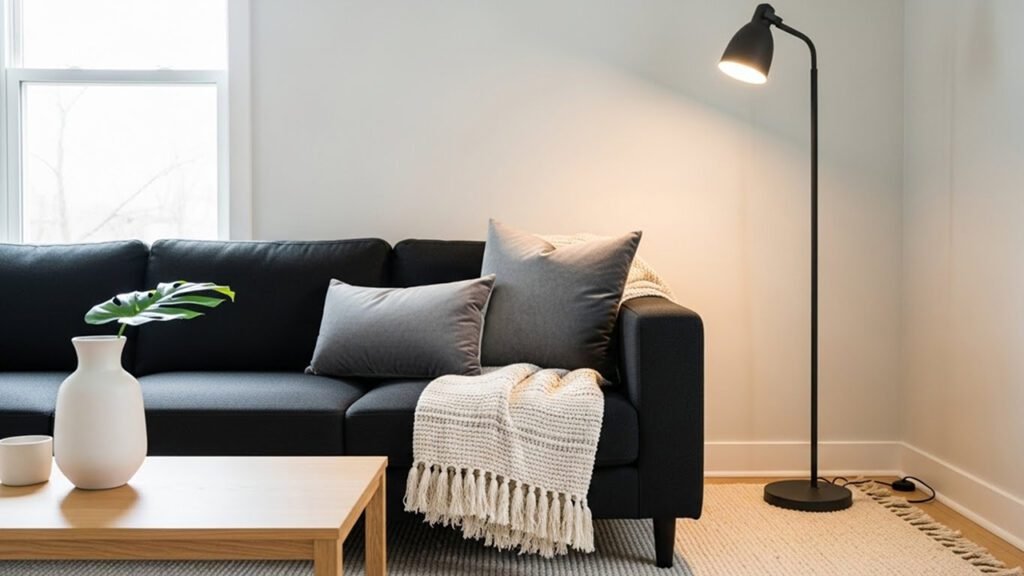
If you’ve been avoiding a black couch because you’re afraid it’ll turn your living room into a cave—you’re not alone. But here’s the truth: a black sofa is one of the most versatile anchors in interior design.
When styled with intention, it adds sophistication, contrast, and depth without gloom.
In fact, many professional designers reach for black upholstery first—it’s timeless, hides wear well, and pairs beautifully with nearly any palette.
The secret? It’s not the couch—it’s what you put around it. Light surfaces, layered lighting, and thoughtful texture choices turn black from heavy to grounded and luminous.
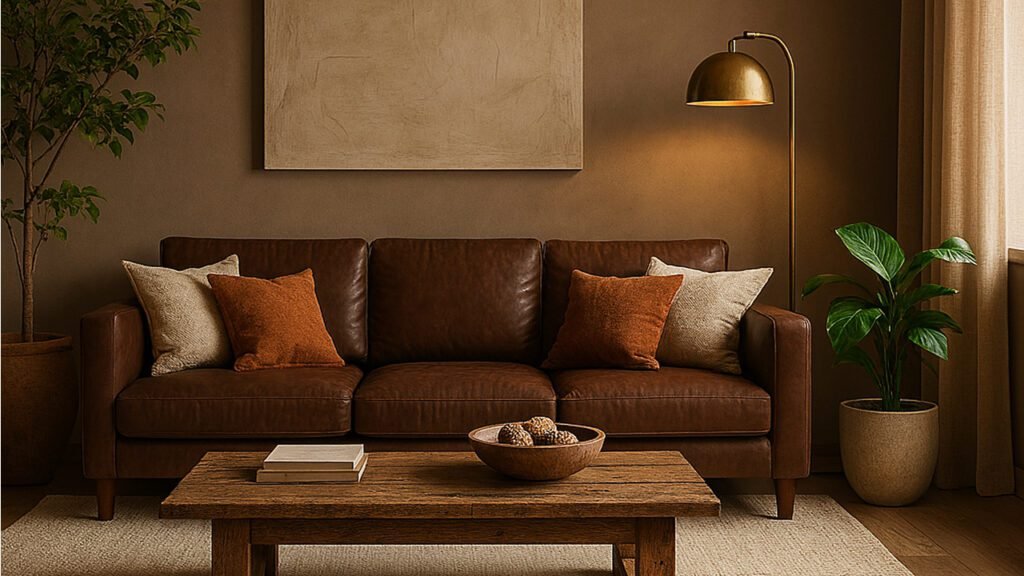
If you love rich, earthy palettes that pair beautifully with black furniture, explore our guide to brown living room decor ideas—where chocolate sofas, taupe walls, and terracotta accents create warmth without overwhelming your space.
Below, we’ll walk through 15 realistic, renter-friendly, and pet-conscious ways to make your black couch living room decor ideas feel bright, inviting, and utterly stylish.
Why a Black Couch Doesn’t Have to Feel Gloomy (And How to Get It Right)
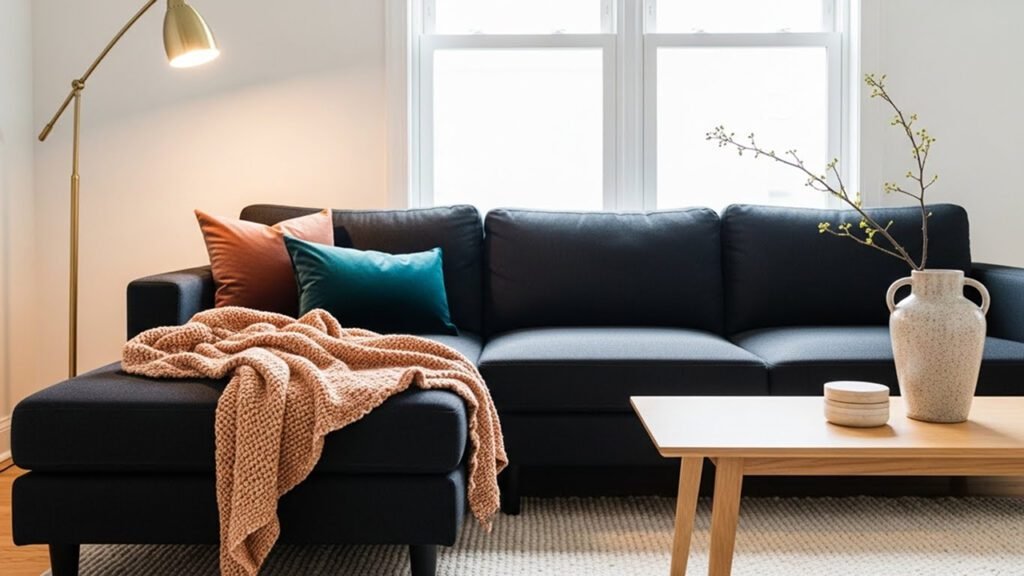
A black couch only feels dark if lighting and surfaces absorb light too. Use walls with Light Reflectance Value (LRV) over 65—like Benjamin Moore Cloud White—layer ambient and task lighting (aim for 30–50 foot-candles), and choose light, reflective floors.
Done right, your black sofa becomes a sophisticated focal point, not a visual void.
Black absorbs up to 90% of visible light, which is why balance matters. But that also means it makes everything around it pop—a cream rug
a brass lamp, or a trailing pothos suddenly feel more vivid. The key is intentional contrast, not avoidance.
For example, a north-facing apartment in Chicago might feel dim with white walls alone.
But add a high-LRV paint, a slim floor lamp behind the couch, and an 8×10 light wool rug, and the black sectional becomes the room’s confident anchor—not its shadow.
Top 15 Black Couch Living Room Decor Ideas
Idea 1 – Pair Your Black Couch with High-LRV Walls

White walls and black couches are a classic combo—but not all whites work equally well.
The right choice depends on Light Reflectance Value (LRV), a scale from 0 (pure black) to 100 (pure white) that measures how much light a surface bounces back.
For a black couch to feel bright, aim for walls with an LRV of 65 or higher.
Paints like Benjamin Moore Cloud White (LRV 82) or Sherwin-Williams Alabaster (LRV 82) reflect enough light to counteract the couch’s absorption, keeping the space feeling open.
Cooler whites (with gray or blue undertones) can make a matte black fabric sofa feel crisp and modern, while warmer whites (with yellow or beige bases) soften black leather and prevent it from looking stark.
Pro tip: Always test paint samples next to your actual couch in both morning and evening light.
A beige that looks warm at noon might read muddy at dusk—especially if your black sofa has cool undertones.
Idea 2 – Use a Light, Textured Rug (That Hides Pet Hair)
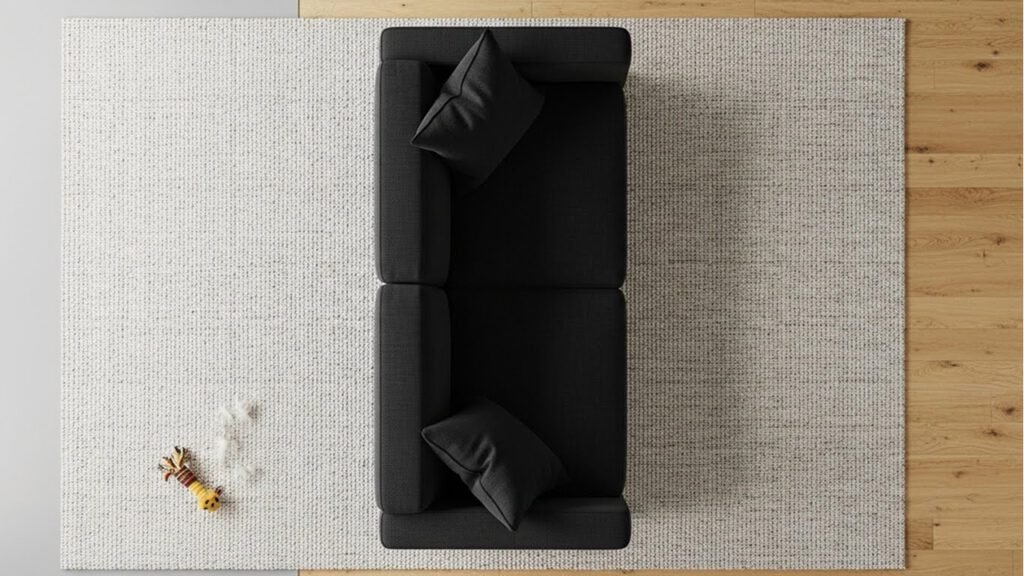
A rug isn’t just decorative—it’s a brightness amplifier under a black couch. But not every light rug works in real life, especially if you have pets or kids.
The goal? Choose a low-pile, textured rug in a light neutral that hides lint, fur, and footprints while reflecting light upward.
Wool and polypropylene rugs in ivory, oat, or soft gray perform best. Avoid high-pile shags—they trap pet hair and show every speck of dust against black upholstery.
Instead, opt for a flat-weave or low-loop weave with subtle variation (like a heathered oat) to camouflage daily wear.
And don’t forget size: the rug should extend at least 12–18 inches beyond the couch on all sides. For a standard 84-inch sofa, that means a minimum 8’x10′ rug.
Anything smaller makes the space feel disjointed—and the black couch visually “floats” without grounding.
Expert Tip: “I specify indoor/outdoor polypropylene rugs for clients with dogs and black sectionals. They’re soft underfoot, resist stains, and clean with a garden hose.” — Lena M., Interior Designer, 12+ years residential
Idea 3 – Layer Lighting with a 3-Point System
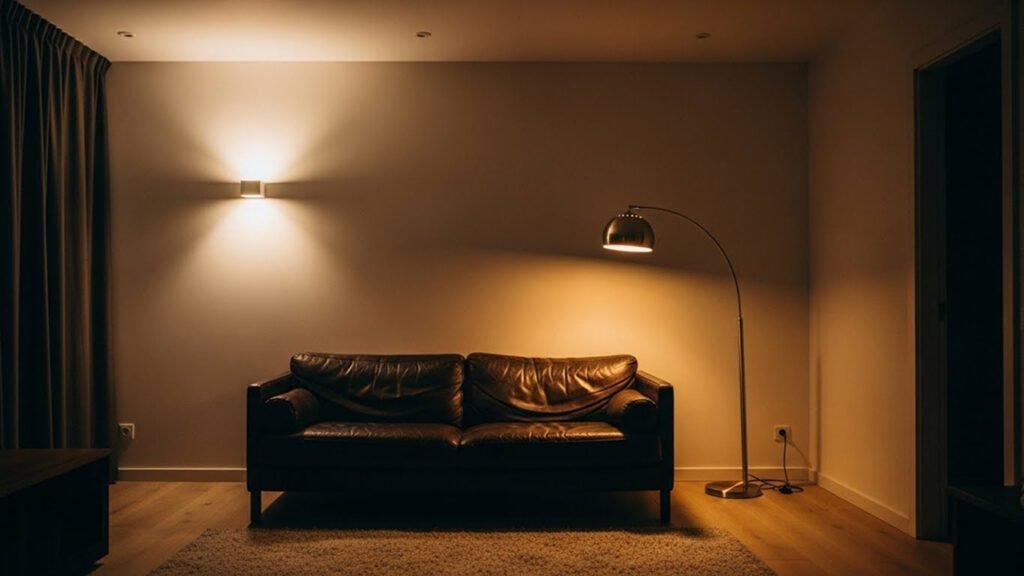
Lighting is the single biggest factor in making a black couch feel inviting—not intimidating.
Because black upholstery absorbs light, you need a layered approach that fills shadows and creates dimension.
The solution? A simple 3-point lighting system: ambient, task, and accent.
- Ambient lighting (like ceiling fixtures or cove lights) provides baseline illumination—aim for 20–30 foot-candles in the room overall.
- Task lighting (a floor lamp beside the couch) delivers focused light for reading—position it behind and slightly to the side of the seating to avoid glare on glossy leather.
- Accent lighting (wall sconces or picture lights) highlights art or architecture, drawing the eye upward and away from the couch’s visual weight.
Pro workflow: Start with ambient, add task lighting at seating level, then use accent to “lift” the space. Use 2700K–3000K bulbs for warmth with black leather; 3500K adds crisp contrast with matte black fabric.
This system ensures your black couch is seen, not swallowed by darkness.
Idea 4 – Style With a 3-Pillow Formula (Not Just ‘Throws’)

Throw pillows are your secret weapon for making a black couch feel textured, balanced, and intentional—but piling on random cushions often backfires.
Instead, use the 3-pillow formula: 60% solid, 30% subtle pattern, 10% bold accent. This ratio prevents visual chaos while adding depth.
Here’s how to apply it:
- Solid (60%): 2 large (22″) pillows in linen, velvet, or performance fabric. Choose warm neutrals like oat, clay, or sage—not stark white, which can feel clinical.
- Subtle pattern (30%): 1 medium (20″) pillow with a tonal geometric, herringbone, or organic stripe in similar hues.
- Bold accent (10%): 1 lumbar (12″x20″) in a rich tone like terracotta, forest green, or deep teal—but keep the pattern minimal.
Material matters: On black leather, lean into luxe textures like matte velvet or bouclé.
On black fabric, use textured weaves (linen, chenille) to avoid a flat look. And if you have pets, skip light bouclé—it shows every black hair.
This system gives your couch a curated, magazine-worthy look without guesswork.
Idea 5 – Mix Warm Wood Tones for Balance
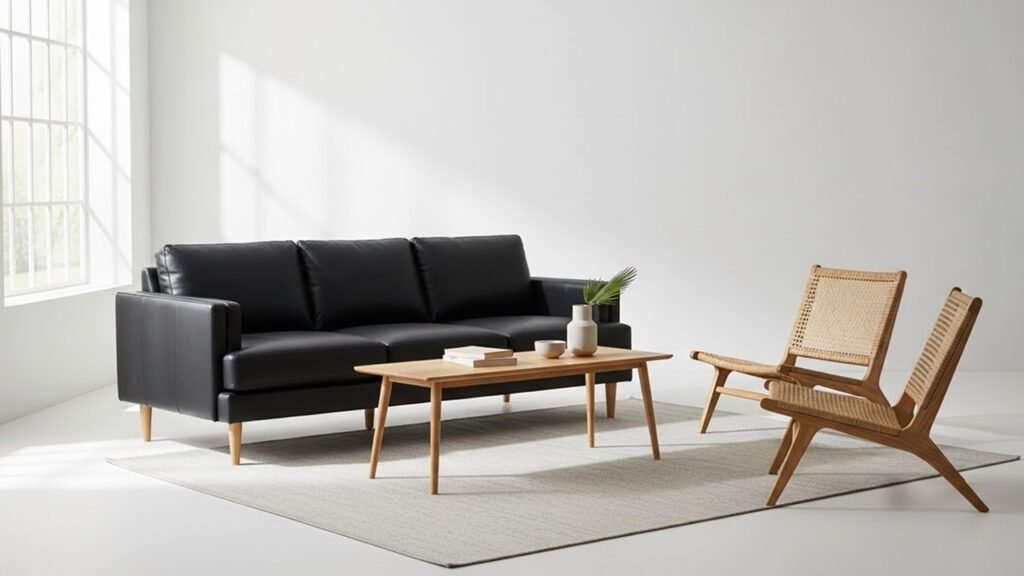
A black couch can feel stark if surrounded by cold materials—but warm wood tones instantly add softness and organic contrast.
Think light oak, walnut, or acacia, not espresso or cherry (which deepens the room’s darkness).
Use wood in furniture legs, coffee tables, sideboards, or open shelving. The key is to repeat the tone at least twice—for example, oak legs on your sofa paired with a matching coffee table—to create rhythm.
This grounds the black upholstery without competing with it.
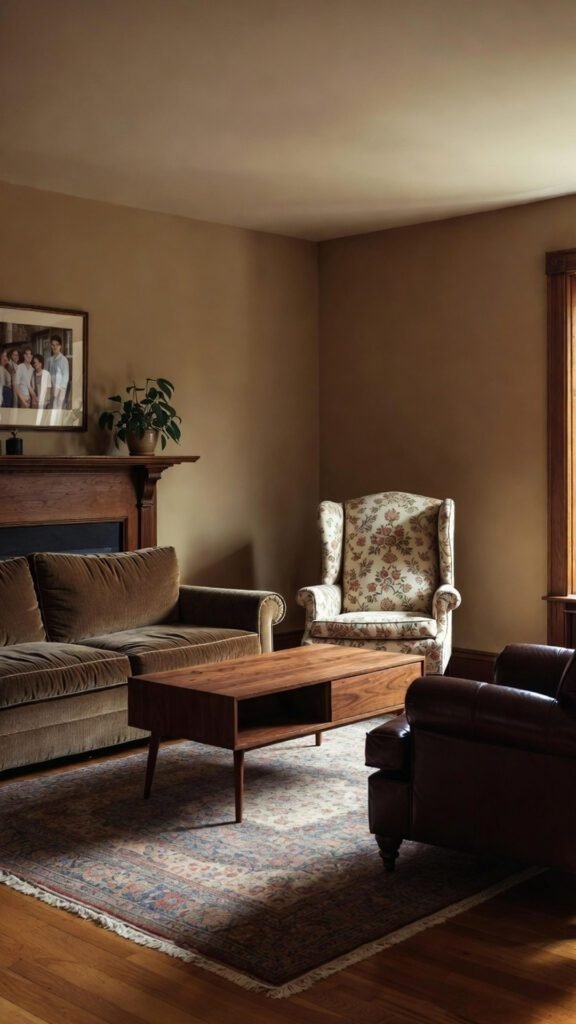
For more on blending wood tones with classic silhouettes, see our traditional living room decor ideas—where cherry, walnut, and oak anchor elegant, livable spaces.
Furniture scale matters, especially in smaller rooms. A chunky, dark wood coffee table can overwhelm a black sectional in a compact space.
Instead, choose a slim-profile table with visible legs to maintain airiness.
This approach anchors your black couch in mid-century modern or Scandinavian design principles, where contrast between dark upholstery and warm wood is a hallmark of sophistication.
Idea 6 – Add Greenery That Thrives in Low Light

Plants aren’t just decor—they’re light reflectors and mood lifters, especially next to a black couch.
But if your living room gets little sun (common in north-facing apartments or spaces with large furniture), choose low-light-tolerant varieties that won’t wilt or yellow.
Top picks:
- ZZ plant (Zamioculcas zamiifolia): Survives in as little as 50 lux—ideal near a dark sofa in a dim corner.
- Snake plant (Sansevieria): Thrives on neglect and filters air; its upright form adds vertical contrast.
- Pothos: Trails beautifully from shelves above the couch, softening hard lines with minimal light.
Styling tip: Use black or terracotta planters to extend the couch’s silhouette, or white ceramic to bounce light upward.
Place plants on floating shelves or side tables within 3–5 feet of the couch to create a living frame without crowding.
Idea 7 – Choose Art That Creates Vertical Light
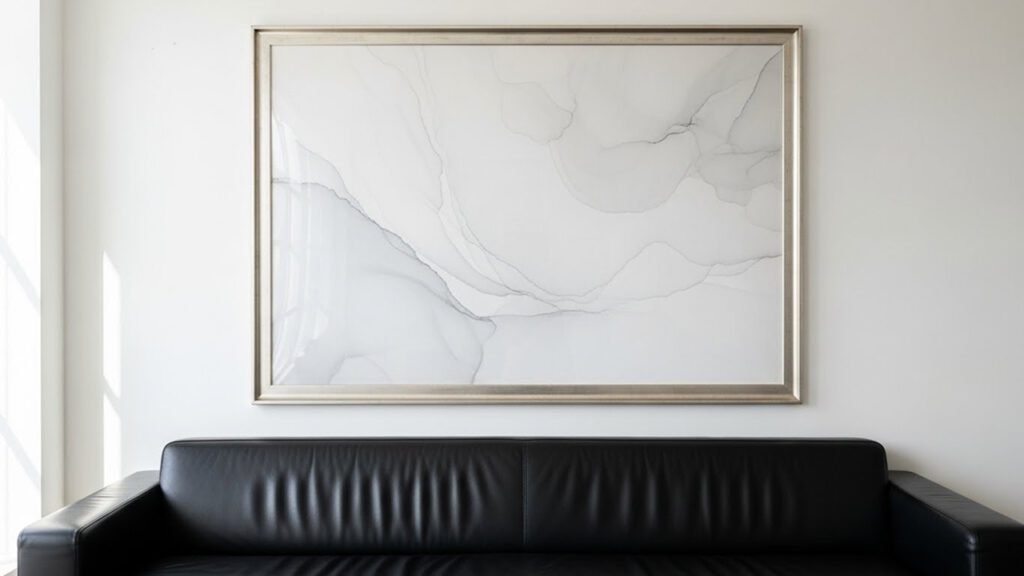
The wall above your black couch is prime real estate for bouncing light and drawing the eye upward—but not all art does the job.
To avoid a “heavy” look, choose pieces with light backgrounds, reflective frames, or strategic placement of mirrors.
Opt for:
- Art with white, sky-blue, or cream backgrounds—landscapes, abstract washes, or minimalist line drawings.
- Frames in light wood, silver, or matte white—never black-on-black, which flattens the wall.
- A large mirror (at least 36″ wide) centered above the couch if you lack art; it reflects windows and effectively boosts perceived brightness by up to 20%.
Want more ways to transform your walls? Discover 25 living room wall decor ideas for 2026—from renter-friendly mirrors to bold accent walls that amplify light and style.
Expert Tip: “Hang art so the bottom edge is 6–8 inches above the couch back. Too high, and it floats; too low, and it crowds.” — Lena M., Interior Designer
This approach turns your wall into a light source, not just decoration.
Idea 8 – Style by Material: Leather vs Fabric Tactics
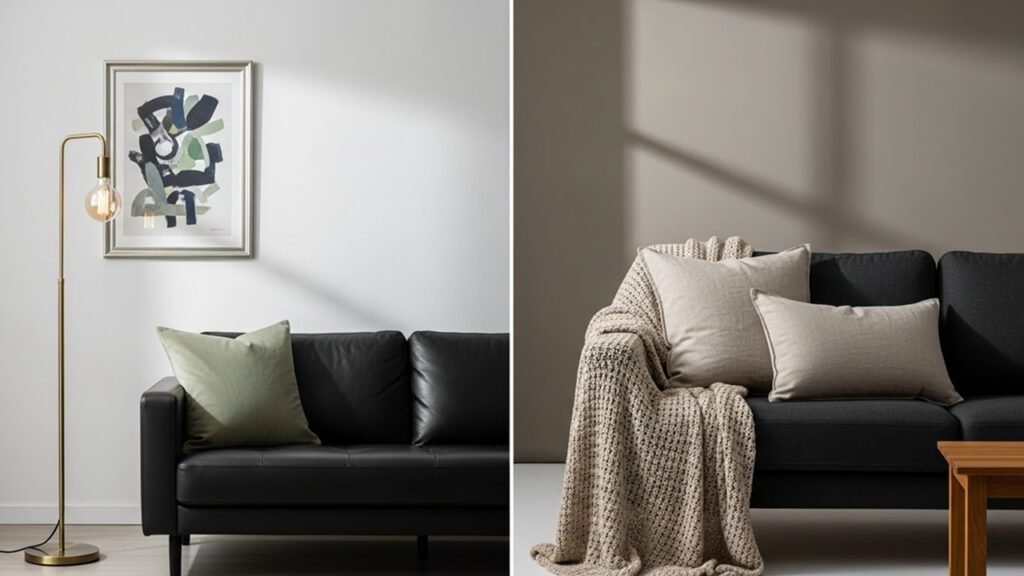
Not all black couches are created equal—and your decor should reflect that. Black leather and black fabric absorb light differently, wear differently, and need distinct styling approaches.
For black leather sofas:
- Avoid direct sunlight (over 500 lux), which fades aniline leather quickly.
- Pair with cool metallics (brushed nickel, chrome) or warm brass for contrast.
- Use smooth, luxe textures like velvet or silk pillows—glossy leather already has sheen, so matte throws add balance.
For black fabric sofas (especially performance velvet or linen):
- Embrace textural layering: chunky knits, woven throws, and nubby rugs add depth to matte surfaces.
- Choose warm lighting (2700K–3000K) to soften the fabric’s flatness.
- If you have pets, stick to performance fabrics with ≥30,000 double rub count—they resist pilling and clean easily.
Key insight: Glossy leather reflects light; matte fabric absorbs it. Your pillows, rugs, and lighting must compensate accordingly.
Idea 9 – Embrace Monochrome with Depth (Not Flatness)
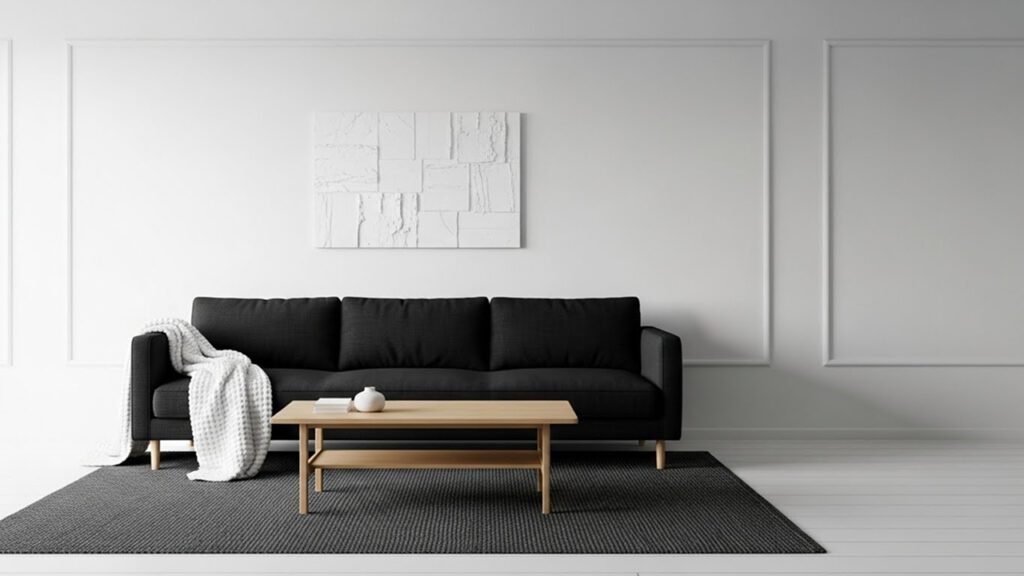
Going all-black-and-white sounds sleek—but without strategy, it can feel flat, stark, or sterile.
The fix? Build tonal depth using three shades of neutral: dark (black couch), mid-tone (charcoal rug or oak wood), and light (white walls, cream textiles).
Start with your black couch as the anchor. Then layer:
- A charcoal or greige rug (not pure black) to create separation from the floor.
- Light wood or white oak furniture to break up darkness horizontally.
- Textural contrast: a bouclé throw, linen curtains, or a nubby jute basket.
Crucially, leave 30% negative space—empty wall, uncluttered floor—to let the eye rest. Monochrome only feels heavy when every surface competes for attention.
This approach delivers Scandinavian-level minimalism with warmth, not coldness.
Idea 10 – Use Metallics Strategically (Not Sparingly)
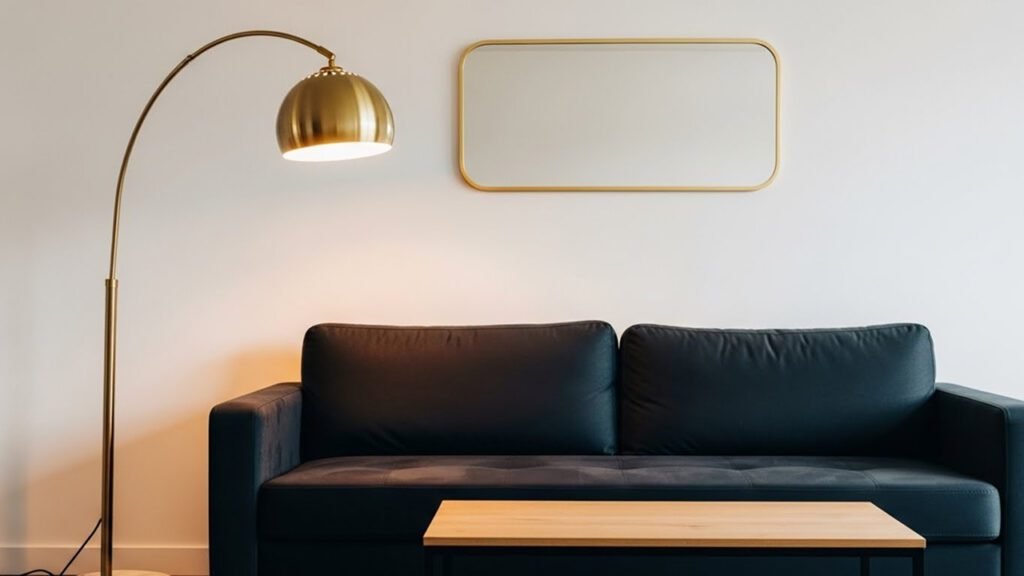
Metallics aren’t just bling—they’re light conductors that counteract a black couch’s light absorption.
But the key is strategic placement, not random sparkle. Focus on functional pieces that serve both form and purpose.
Warm metals like brass, gold, or matte black steel work best:
- Brass floor lamp base beside the couch → casts a warm pool of light.
- Gold-framed mirror above the sofa → reflects both light and views.
- Matte black metal coffee table legs → extend the couch’s line without glare.
Avoid chrome or cool silver in rooms with black leather, as it can amplify coldness.
Instead, lean into mixed metallics only if they share a temperature—e.g., brass + antique gold, not brass + nickel.
Pro tip: Two to three metallic elements are enough. More than that risks a “costume jewelry” effect—shiny but chaotic.
Idea 11 – Decorate for Small Spaces Without Crowding

A black couch in a small living room isn’t a dealbreaker—it’s an opportunity for bold contrast and clarity. But success depends on scale, legibility, and flow.
Follow these rules:
- Choose a low-profile, leggy sofa (not a deep, skirted sectional). Visible floor space = more airiness.
- Leave at least 30 inches of walkway behind the couch in open-concept layouts.
- Use wall-mounted shelves instead of floor cabinets to reduce visual clutter.
- Match rug size to room: In studios under 300 sq ft, a 5’x8′ rug may suffice—but never float the couch on a tiny rug.
Color trick: Pair your black couch with white or light gray walls and one warm wood accent (like a floating shelf). This creates a “frame” that defines the zone without enclosing it.
In tight spaces, black acts as an anchor, not an obstacle—when you style with intentionality, not fear.
Idea 12 – Create a Renter-Friendly, No-Damage Setup
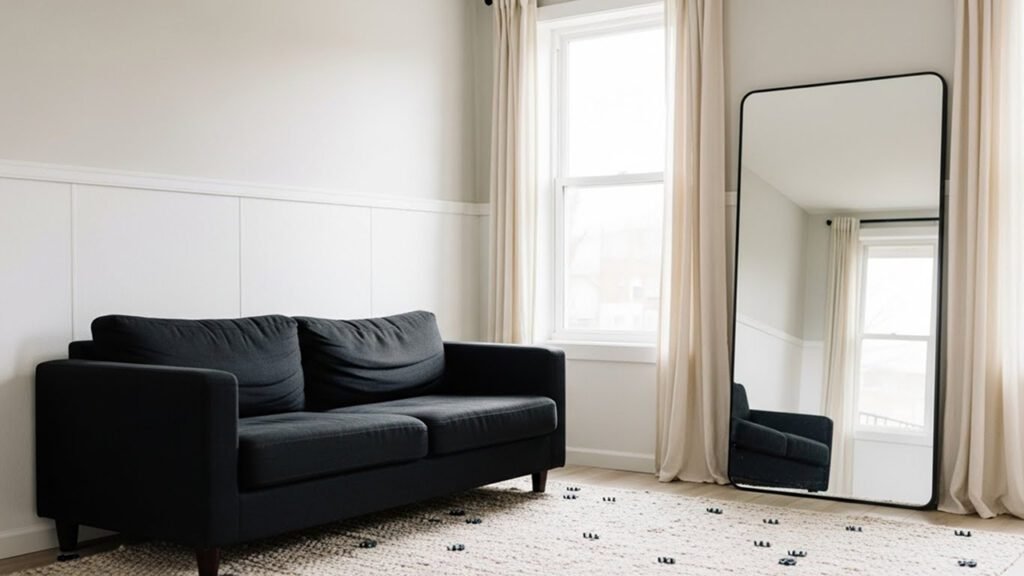
Renters often skip black couches thinking they’ll clash with outdated walls or require permanent changes—but you can style boldly without nails, paint, or deposits.
Try these no-damage swaps:
- Peel-and-stick wall panels in high-LRV whites or warm greiges (look for LRV >65 options).
- Leaning floor mirrors instead of wall-mounted art—position opposite a window to double natural light.
- Adhesive-free rug grippers to keep your 8’x10′ light rug in place on hardwood.
- Tension rod curtains in linen or light weave to soften windows without drilling.
Pro move: Use a room divider screen behind the couch to hide dated walls or create a “headboard” effect—many fold flat for move-out.
Your landlord never needs to know you transformed a drab space into a bright, intentional living room with a black couch as the star.
Idea 13 – Go Bold with Earthy Accent Colors (Not Neon)

Black is the ultimate neutral—which means it pairs beautifully with rich, grounded tones, not loud neons.
The most harmonious accents share muted undertones that complement rather than compete.
Top earthy picks:
- Sage green (#8A9B6C): A gray-leaning green that softens black without clashing.
- Terracotta (#CC7755): Warm and inviting, especially with black leather and oak wood.
- Deep teal (#2E4F4F): Adds depth in rooms with plenty of light—ideal for throw blankets or a single accent pillow.
These same earthy tones anchor our brown living room decor guide, where brown + sage + terracotta create tonal harmony across sofas, rugs, and walls.
Avoid: Pure lime green, electric blue, or bright red—they create visual vibration against black’s intensity. Instead, choose colors with at least 30% gray or brown in their base.
These earthy tones bring organic warmth while keeping your space serene and adult—not trendy or chaotic.
Idea 14 – Build a Maintenance-Friendly Decor System
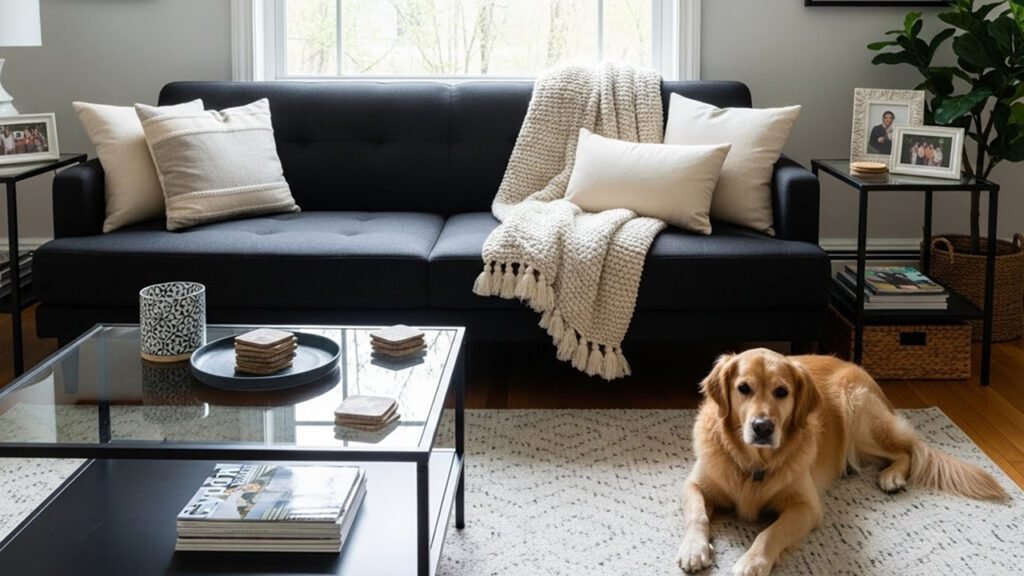
A black couch in a home with kids, pets, or high traffic demands decor that’s both beautiful and practical.
The goal isn’t to sacrifice style—it’s to choose pieces that resist stains, hide lint, and clean easily.
Start with these smart swaps:
- Throws: Use Crypton® or Sunbrella® indoor fabric—stain-resistant, machine-washable, and soft.
- Rugs: Opt for indoor/outdoor polypropylene in light heathered tones—they repel spills and shed pet hair with a shake.
- Pillows: Choose performance velvet or tightly woven linen with zippers for easy washing.
- Surfaces: Pair your couch with a glass or light wood coffee table—no dark stains from wet cups.
Pro checklist: Before buying any decor item, ask:
- Can it be wiped or washed?
- Does it hide black pet hair or lint?
- Will sunlight fade it near a south-facing window?
This system ensures your black couch stays stylish through real life—not just photo shoots.
Idea 15 – Use a Coffee Table That Reflects Light
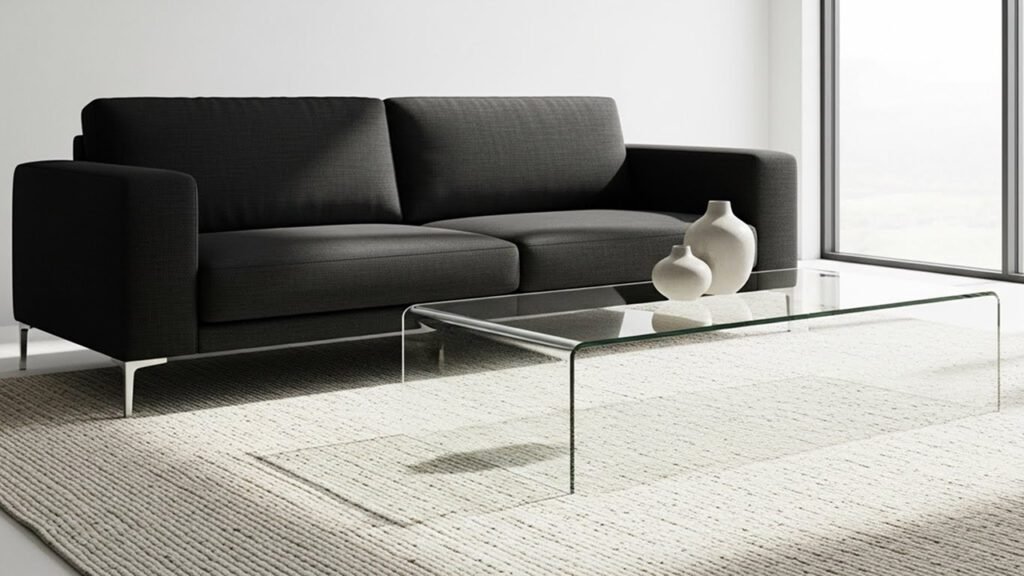
Your coffee table does more than hold drinks—it shapes how light moves across your black couch.
A dark or matte table absorbs light, deepening shadows. Instead, choose a surface that bounces brightness upward.
Top options:
- Tempered glass: Nearly invisible, lets light pass through to the rug below.
- Light oak or white oak: Warm, reflective grain without glare.
- White lacquer or matte ceramic: Soft sheen that diffuses light gently.
Avoid: Dark espresso, black metal (unless matte and minimal), or high-gloss black—these double the visual weight of your couch.
Scale tip: The table should be 1–2 inches lower than the couch seat and span at least two-thirds of the sofa’s width. This grounds the space without blocking light paths.
A reflective coffee table turns your seating zone into a lightwell, not a pit.
Your Black Couch Decor Checklist (Before You Buy Anything)

Before you shop for pillows, rugs, or art, run through this 5-point checklist to ensure every purchase supports a bright, balanced, and functional space around your black couch.
✅ 1. Confirm room and couch dimensions
Measure your sofa and room. Ensure rug extends 12–18″ beyond the couch; leave 30″ walkway in open plans.
✅ 2. Test wall LRV with real samples
Hold paint swatches next to your actual couch in morning and evening light. Choose LRV ≥65.
✅ 3. Choose a rug that’s both light and practical
8’x10′ minimum, low-pile wool or polypropylene, in ivory, oat, or soft gray—especially if you have pets.
✅ 4. Plan your 3-point lighting system
Ambient (ceiling), task (floor lamp), accent (sconce or art light)—with 2700K–3500K bulbs based on your couch material.
✅ 5. Apply the 3-pillow formula
60% solid (22″), 30% subtle pattern (20″), 10% bold accent (lumbar)—in lint-resistant, washable fabrics.
This checklist turns inspiration into action—without buyer’s remorse.
FAQs: Real Questions About Decorating with a Black Couch
We’ve styled dozens of black couches in real homes—from sun-drenched lofts to basement apartments. Here are the questions we hear most, with clear, actionable answers.
How do you make a black couch living room feel bright and airy?
Use walls with LRV over 65, layer three types of lighting (ambient, task, accent), and choose a light, large rug (8’x10′ minimum).
Add warm wood tones and greenery to soften the contrast. Avoid dark floors or black-on-black furniture.
What rug colors and materials work best with a black couch and pets?
Go for light heathered wool or indoor/outdoor polypropylene in ivory, oat, or soft gray.
These hide pet hair, resist stains, and reflect light. Avoid high-pile shags or cream solids—they show every black hair and lint speck.
What wall colors complement a black leather vs. fabric sofa?
Black leather pairs beautifully with cool whites or greiges (like Sherwin-Williams Alabaster).
Black fabric looks best with warm whites or soft beiges (like Benjamin Moore White Dove)—but always check undertones to avoid mud.
How should you layer lighting around a black sectional sofa?
Place a floor lamp behind and to the side for task light, use recessed or pendant fixtures for ambient fill, and add a wall sconce at 60″ height to highlight art.
Use 2700K–3000K bulbs for warmth; avoid bare bulbs that cast harsh shadows.
What throw pillow combination looks best on a black couch?
Follow the 3-pillow formula: 2 large (22″) solids in oat or sage, 1 medium (20″) with subtle pattern, and 1 lumbar (12″x20″) in terracotta or deep teal. Choose performance velvet or linen for durability—especially with pets.
Final Verdict: Why Brown Living Rooms Dominate 2026
A black couch isn’t a design hurdle—it’s a foundation for confidence, contrast, and calm. Across 15 ideas, we’ve shown how lighting, texture, color science, and real-life constraints like pets, rentals, and small spaces can all coexist with black upholstery—without a single cave-like corner.
As a designer who’s styled black couches in everything from NYC studios to sun-bleached California lofts, I’ve seen this one truth hold: the darker the anchor, the brighter the room can feel—when you balance it with intention.
Whether you’re drawn to modern minimalism, cozy farmhouse, or timeless traditional design, your foundation starts with intention. For more room-by-room inspiration, visit Homeroa’s living room decor hub.
So keep your black couch. Lean into it. And use these strategies to build a living room that’s not just stylish, but lived-in, resilient, and radiant.
Have a before-and-after? We feature real reader rooms monthly—tag us with #BrightBlackCouch.