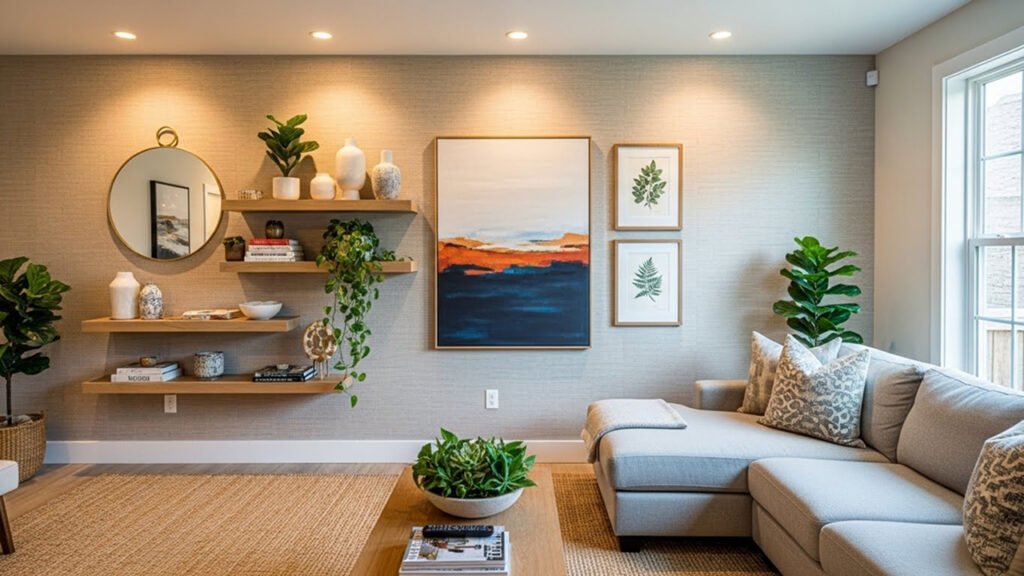
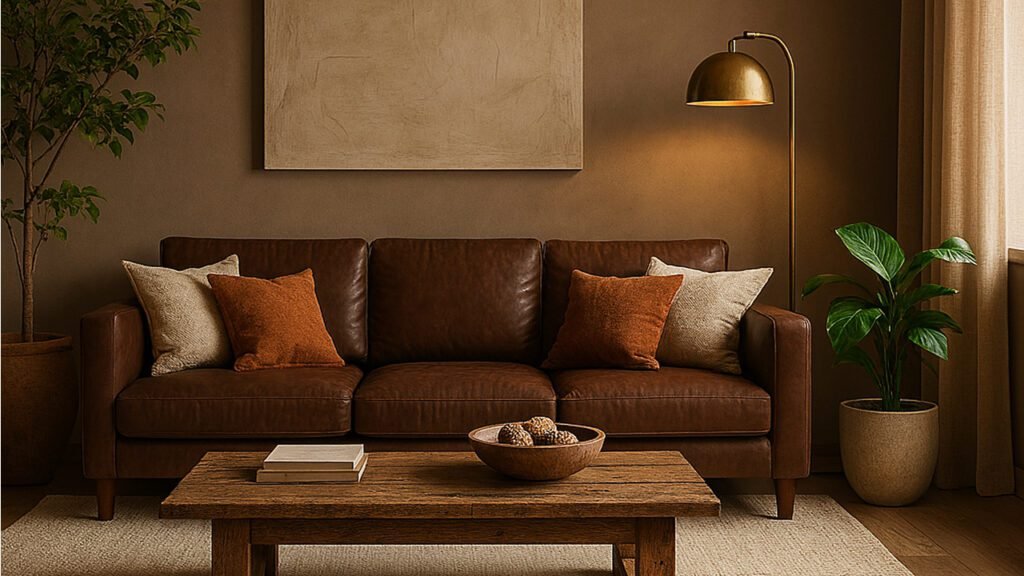
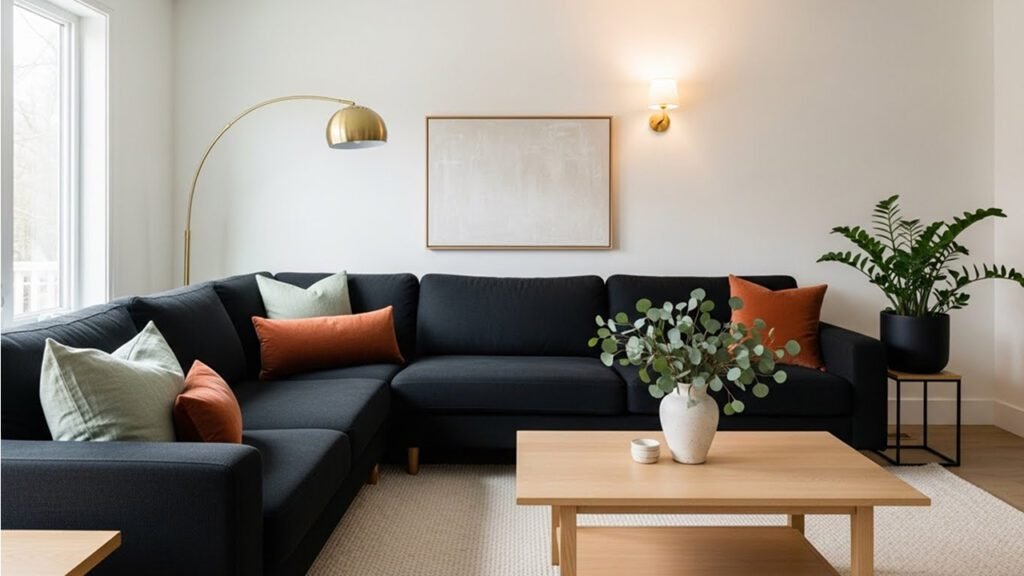
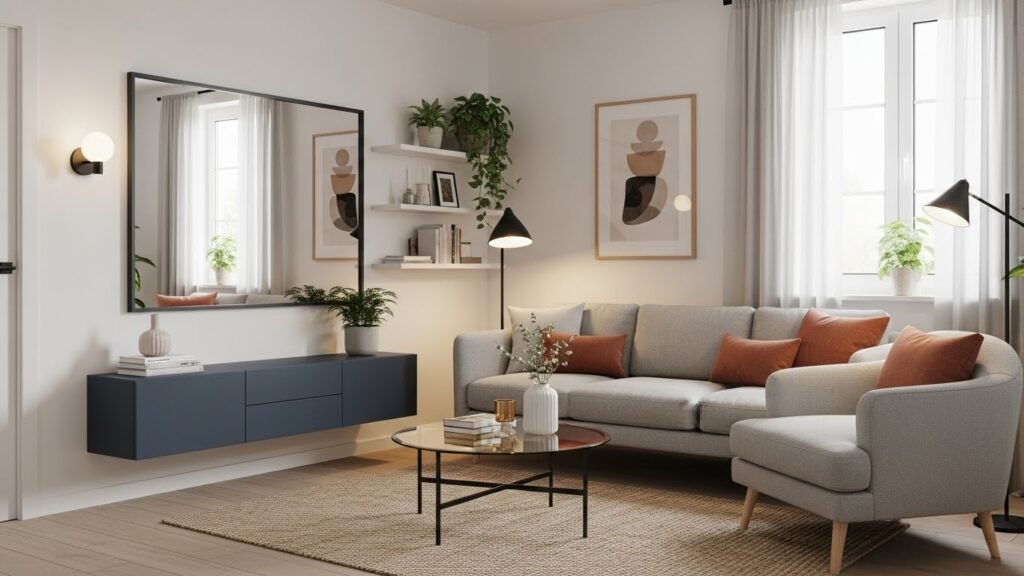
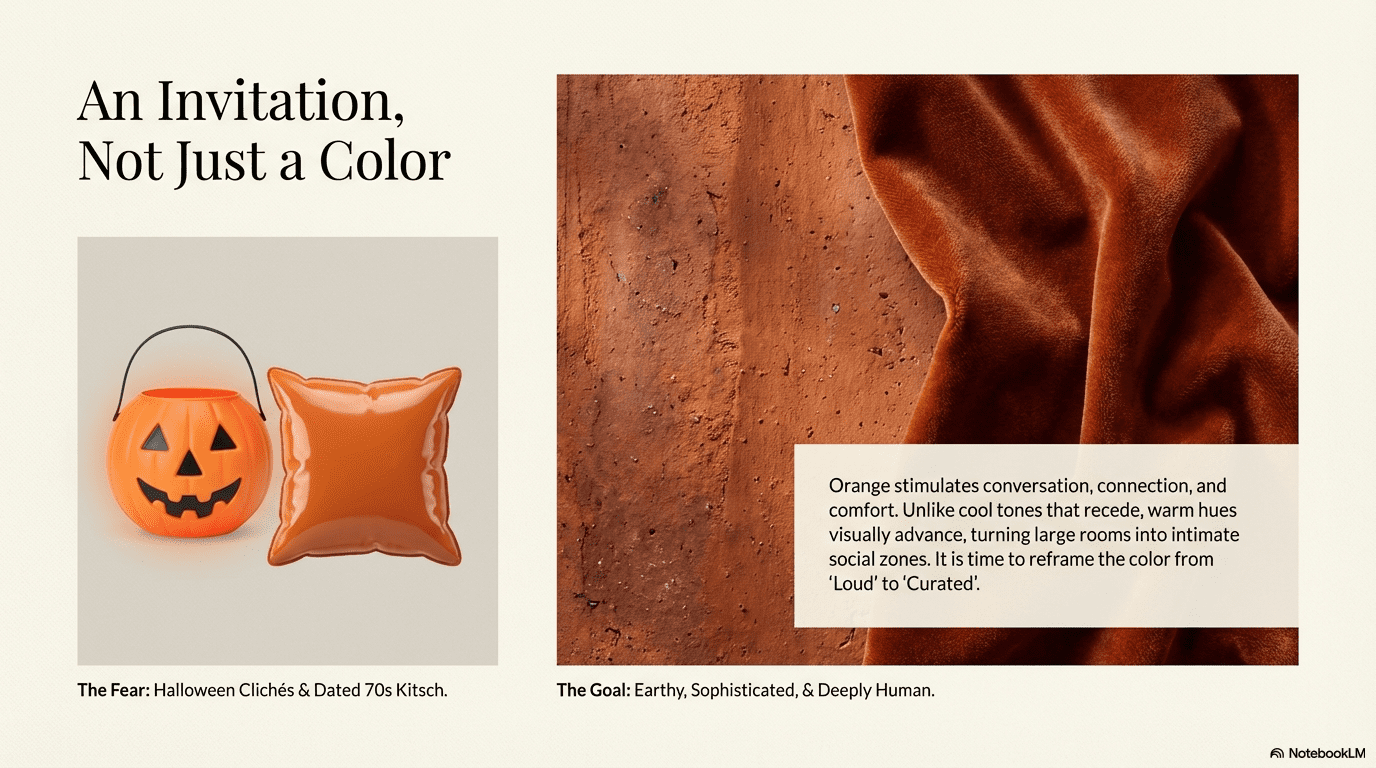
Orange isn’t just a color—it’s an invitation. When used thoughtfully, orange living room decor ideas create spaces that feel warm, welcoming, and alive with energy. Forget Halloween clichés or dated 1970s schemes.
Before diving into color, it helps to master the fundamentals of balanced, intentional living room design—proportion, lighting, and flow matter just as much as hue.
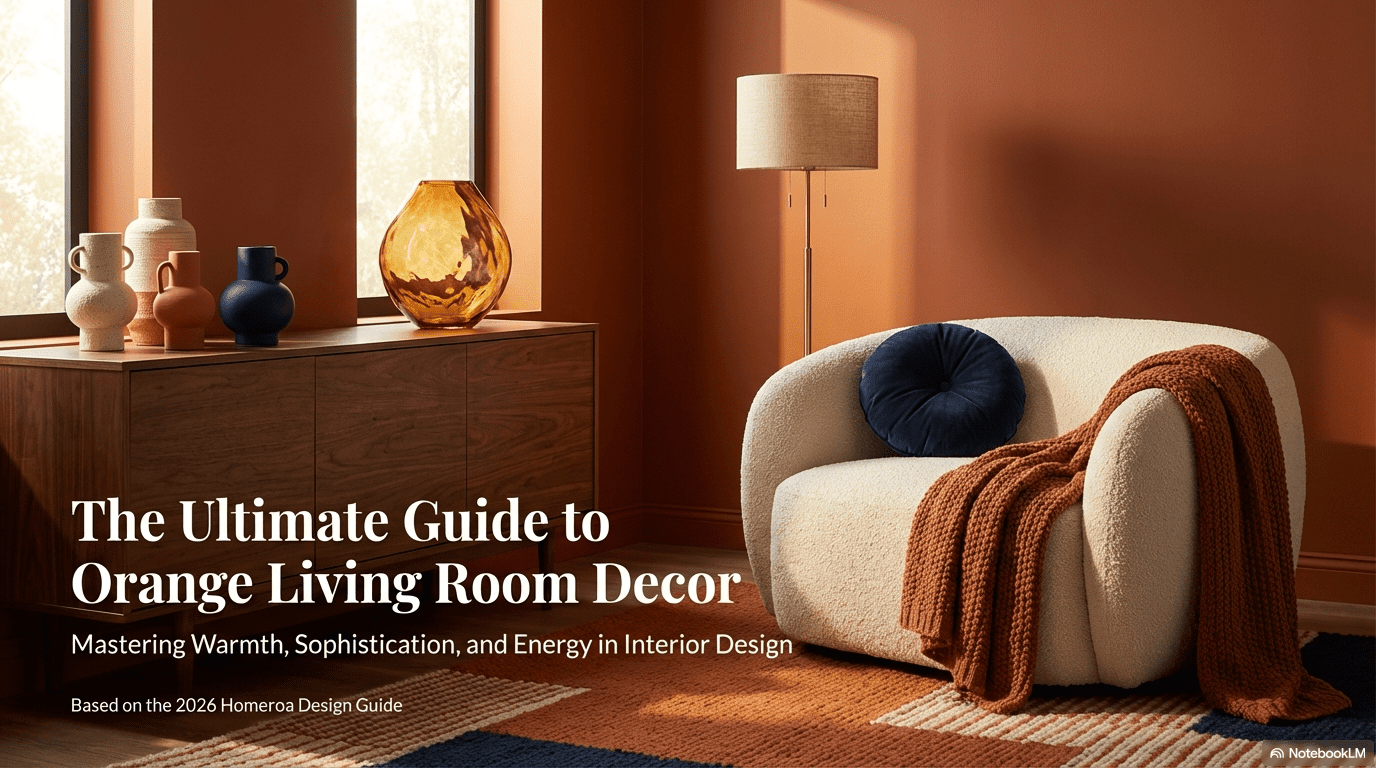
Today’s orange is earthy, sophisticated, and deeply human—from terracotta walls inspired by Moroccan riads to burnt orange velvet sofas that glow under soft lighting.
This guide cuts through the noise with paint codes, material science, global inspiration, and step-by-step plans so you can bring orange into your home with confidence.
Why Orange Works in Living Rooms (And How to Get It Right)
Science backs what designers have long known: orange stimulates conversation, comfort, and connection—exactly what a living room should do.
Unlike cool tones that recede, warm hues like rust and amber advance visually, making large rooms feel cozier and social zones more intimate.
But success hinges on choosing the right shade, pairing it wisely, and respecting how light changes its mood throughout the day.
What Are the Best Shades of Orange for a Living Room?
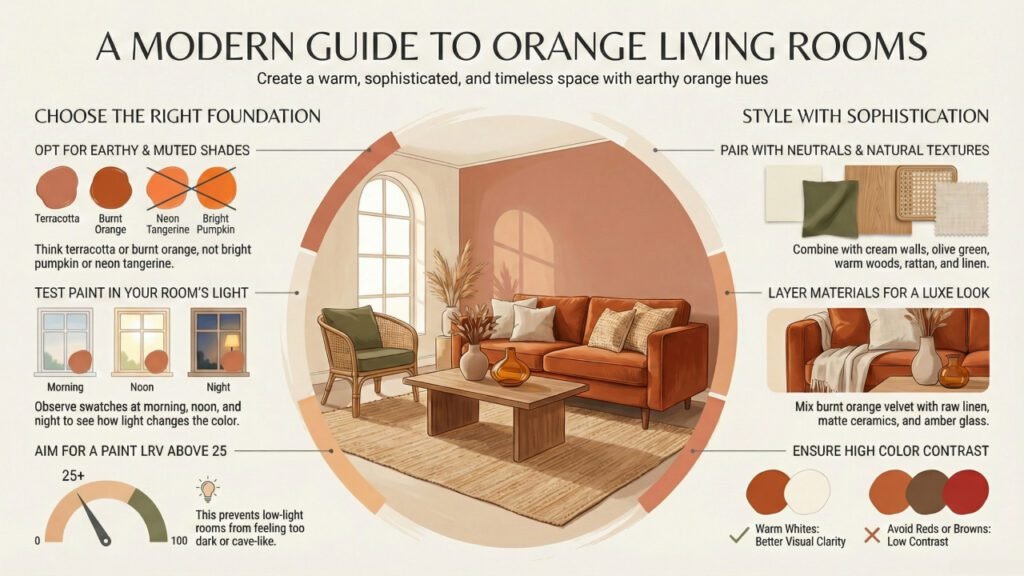
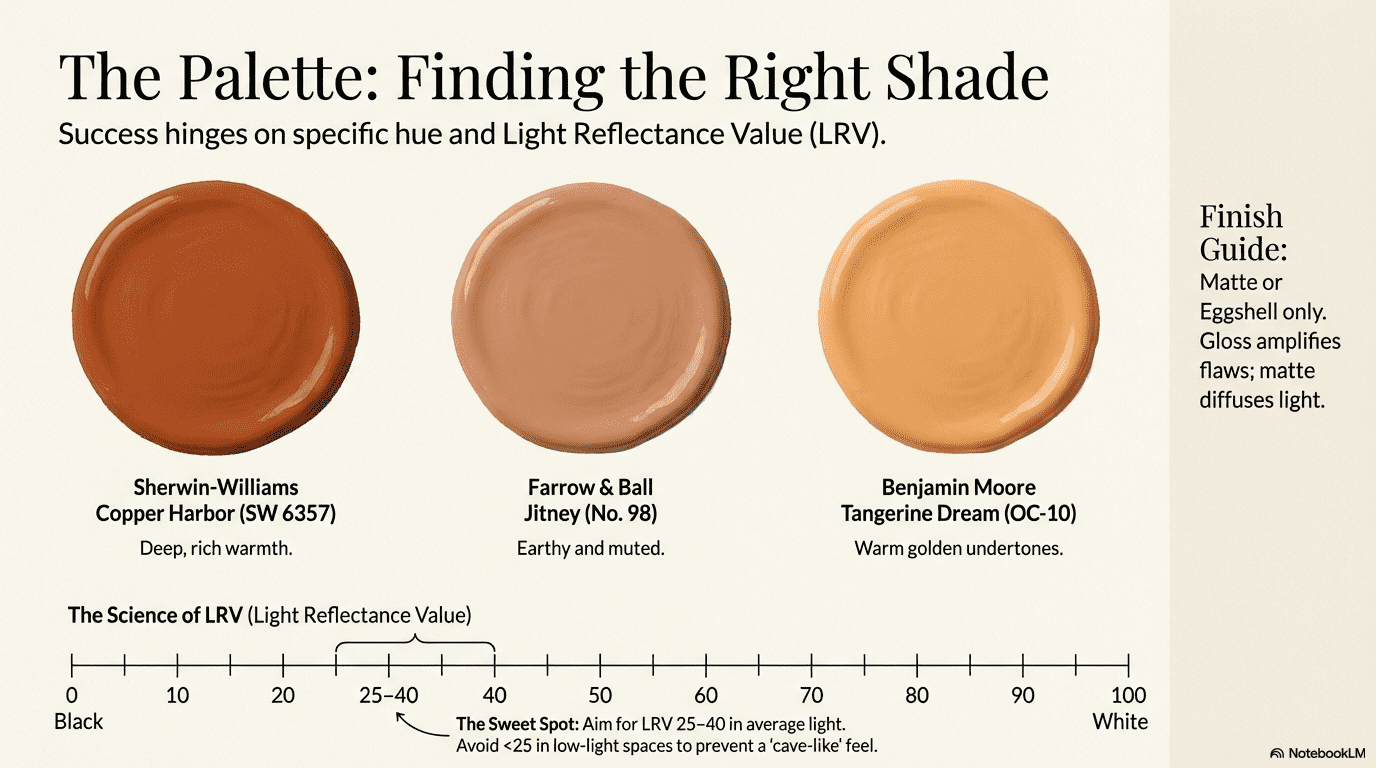
The best orange shades balance warmth and restraint. Think burnt orange (like Sherwin-Williams Copper Harbor, SW 6357, LRV 28), earthy terracotta, or Farrow & Ball’s Jitney (No. 98)—not neon tangerine.
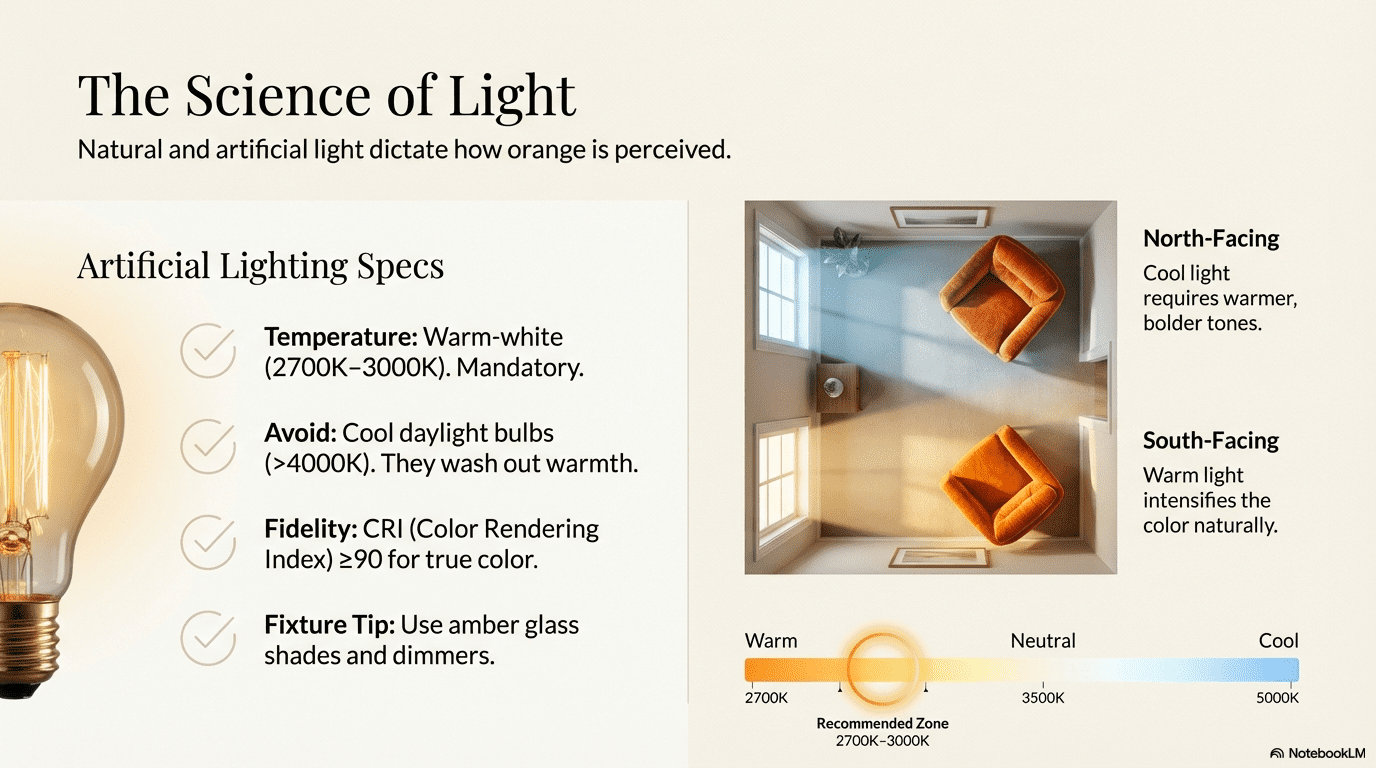
Always test swatches on your wall and observe them at dawn, noon, and dusk. Natural light shifts undertones dramatically; a warm golden orange may look muddy in a north-facing room with cool light.
Pro Tip: For low-light spaces, stick to oranges with LRV above 25 to avoid a cave-like feel. Eggshell or matte finishes diffuse light softly and hide imperfections better than satin.
How Do You Decorate with Orange Without It Looking Like Halloween?
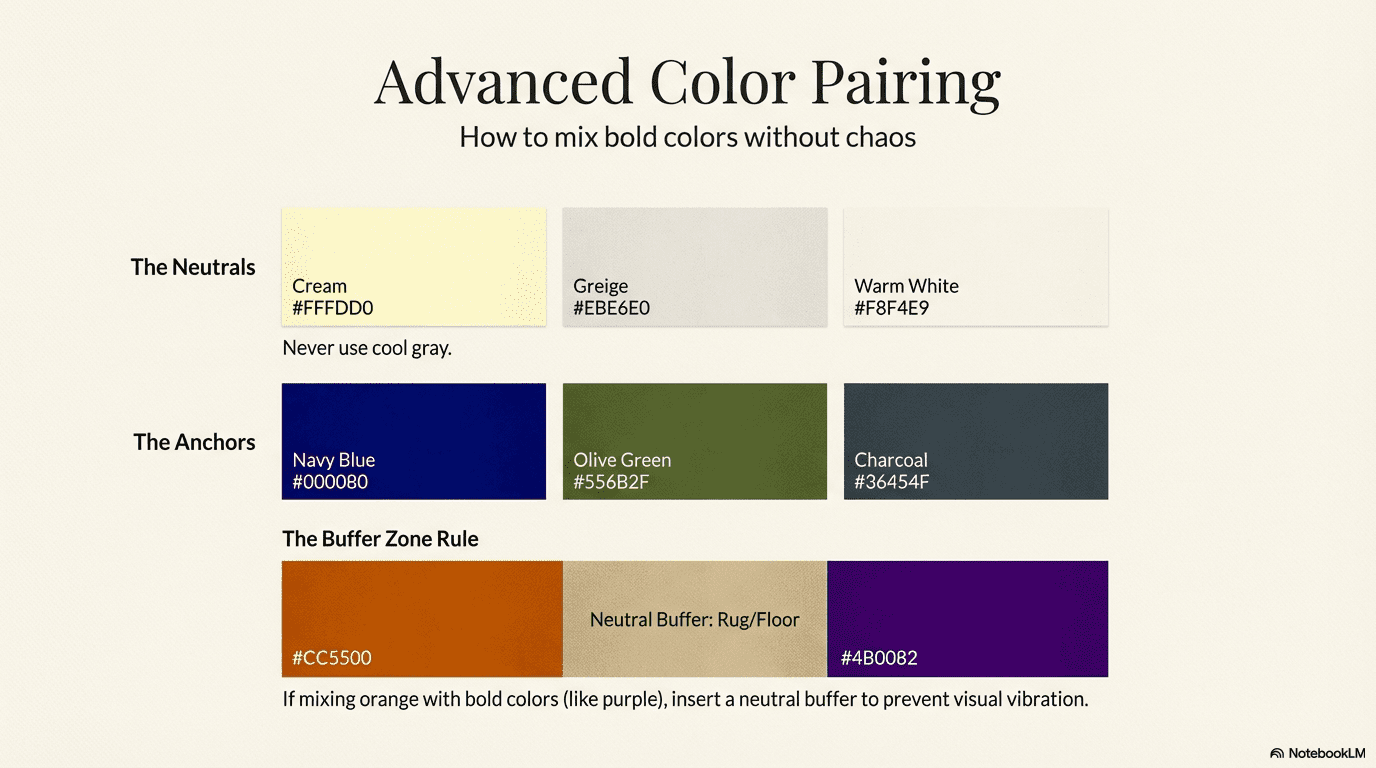
Avoid seasonal clichés by leaning into muted, earthy tones and natural textures. Pair orange with cream walls, olive green accents, or warm wood furniture—not black or stark white.
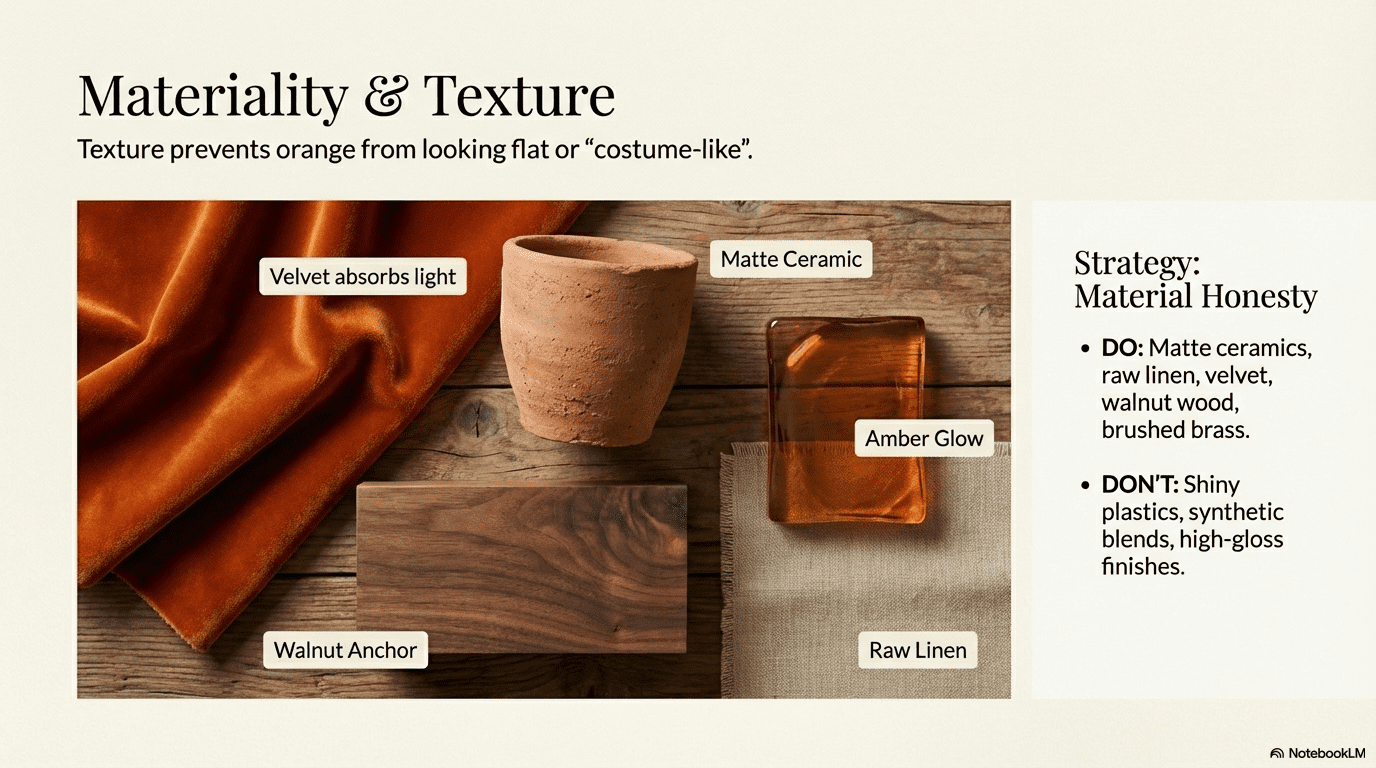
Layer materials like rattan, linen, and matte ceramics to add depth and maturity. A single bold piece (like a rust-colored sofa) against a neutral backdrop feels intentional, not festive.
Rule of Thumb: If your orange looks like a pumpkin spice latte, it’s probably too saturated for year-round use. Opt for clay-inspired hues instead.
Is Orange Suitable for Small or Dark Living Rooms?
Yes—but with strategy. In small spaces, use orange as an accent wall or in textiles, not on all four walls.
For dark rooms, choose warm-white lighting (2700K–3000K) with CRI ≥90 to preserve true color. Avoid high-gloss finishes, which amplify surface flaws and create glare.
Instead, matte paints and woven textures absorb light gently, adding richness without overwhelming.
Lighting Checklist:
- Use floor or table lamps with amber glass shades
- Install dimmers to adjust intensity
- Avoid cool daylight bulbs (>4000K)—they wash out orange
In compact rooms, less is more—see our guide to cozy small-space layouts that make orange feel expansive, not overwhelming for layout tricks and scale tips.

Our Most Loved Living Room Posts
Global & Cultural Inspirations for Orange Decor
Orange isn’t just a trend—it’s a thread woven through centuries of global design.
From the sun-baked courtyards of Morocco to the quiet elegance of Japanese tea rooms, cultures worldwide use orange to express warmth, earthiness, and artistry.
Unlike generic Western interpretations that lean on pumpkin or rust alone, these traditions offer nuanced, sustainable, and deeply intentional ways to bring orange into your living room.
How Different Cultures Use Orange in Interior Design
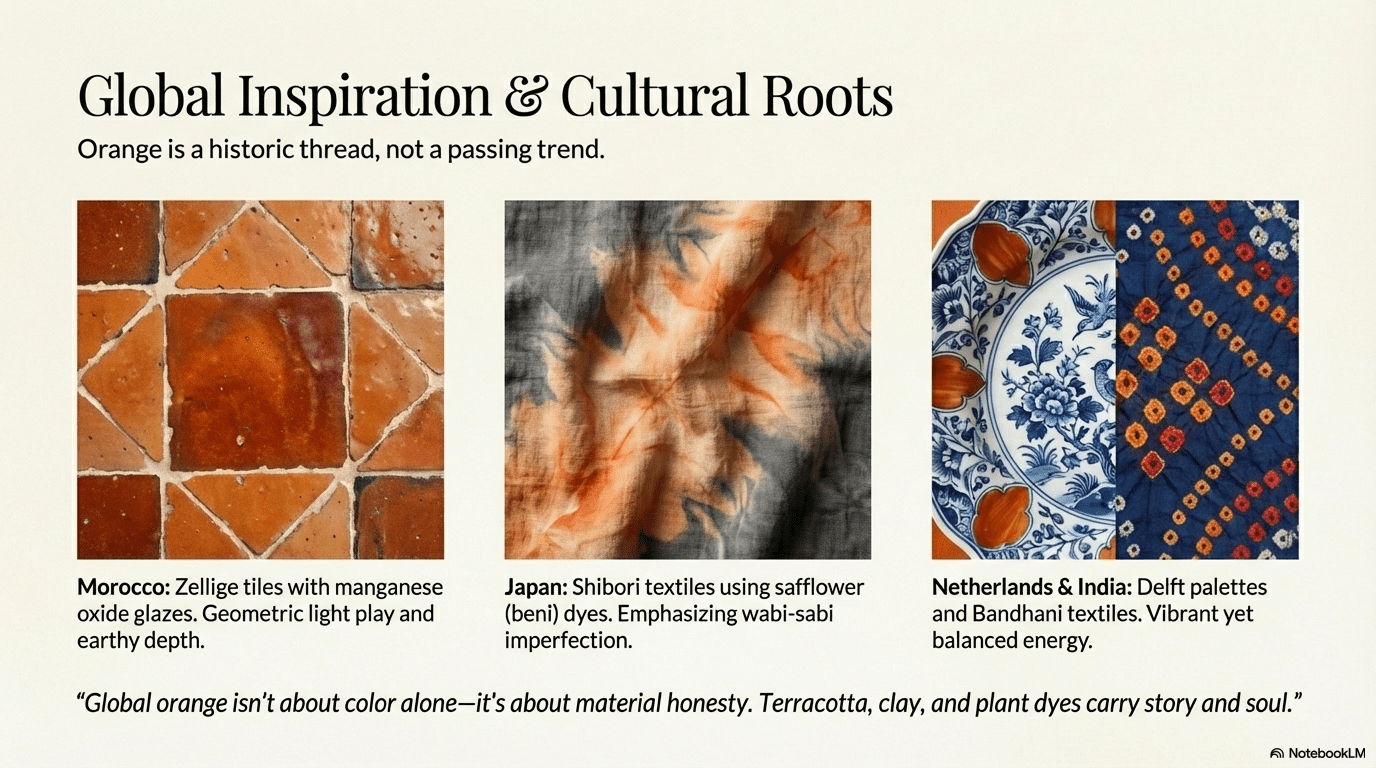
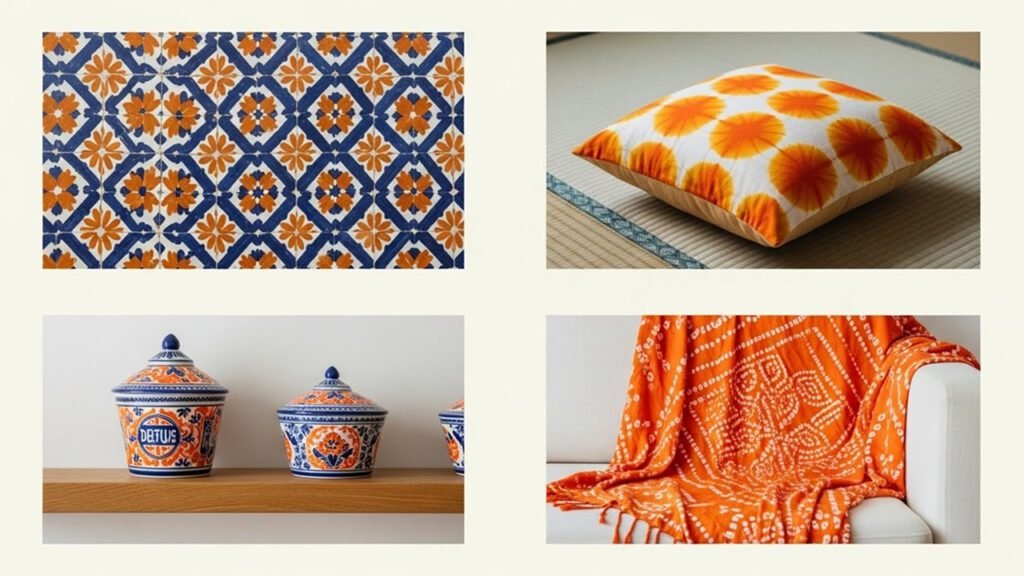
In Moroccan riads, hand-cut zellige tiles in manganese oxide–glazed orange create intricate geometric patterns that dance with light. I
n Japan, shibori-dyed indigo textiles often feature subtle orange accents from natural safflower (beni) dye, embodying wabi-sabi imperfection.
Dutch interiors celebrate orange through Delft-inspired pottery and historic canal house palettes, while Indian homes use Bandhani tie-dye fabrics in vibrant tangerine for festive yet balanced energy.
Expert Insight: “Global orange isn’t about color alone—it’s about material honesty. Terracotta, clay, plant dyes, and hand-thrown ceramics carry story and soul,” says interior historian Lena Moreau.
These approaches avoid synthetic saturation. Instead, they rely on natural pigments and artisan techniques that age gracefully—offering a blueprint for timeless, not trendy, decor.
Can You Mix Orange with Other Bold Colors?
Yes—but thoughtfully. In Moroccan design, orange coexists with deep cobalt blue in tilework, separated by neutral grout lines that act as visual buffers.
Japanese aesthetics pair muted orange with charcoal black or moss green, using asymmetry to maintain calm. The key? Limit your bold palette to two statement hues, and anchor them with natural wood, stone, or undyed linen.
Rule to Remember: Orange and purple can work—but only if you insert a neutral buffer zone (like a beige rug or oak floor) to prevent visual vibration.
Your Step-by-Step Orange Decor Action Plan
Forget vague inspiration—this is your 7-day roadmap to a confident, cohesive orange living room.
Whether you’re painting a wall, shopping for textiles, or testing swatches, this plan blends practicality with design intelligence.
Each step includes material guidance, lighting checks, and sustainability notes so your choices last years, not seasons.
Week 1: Assess & Test Your Space
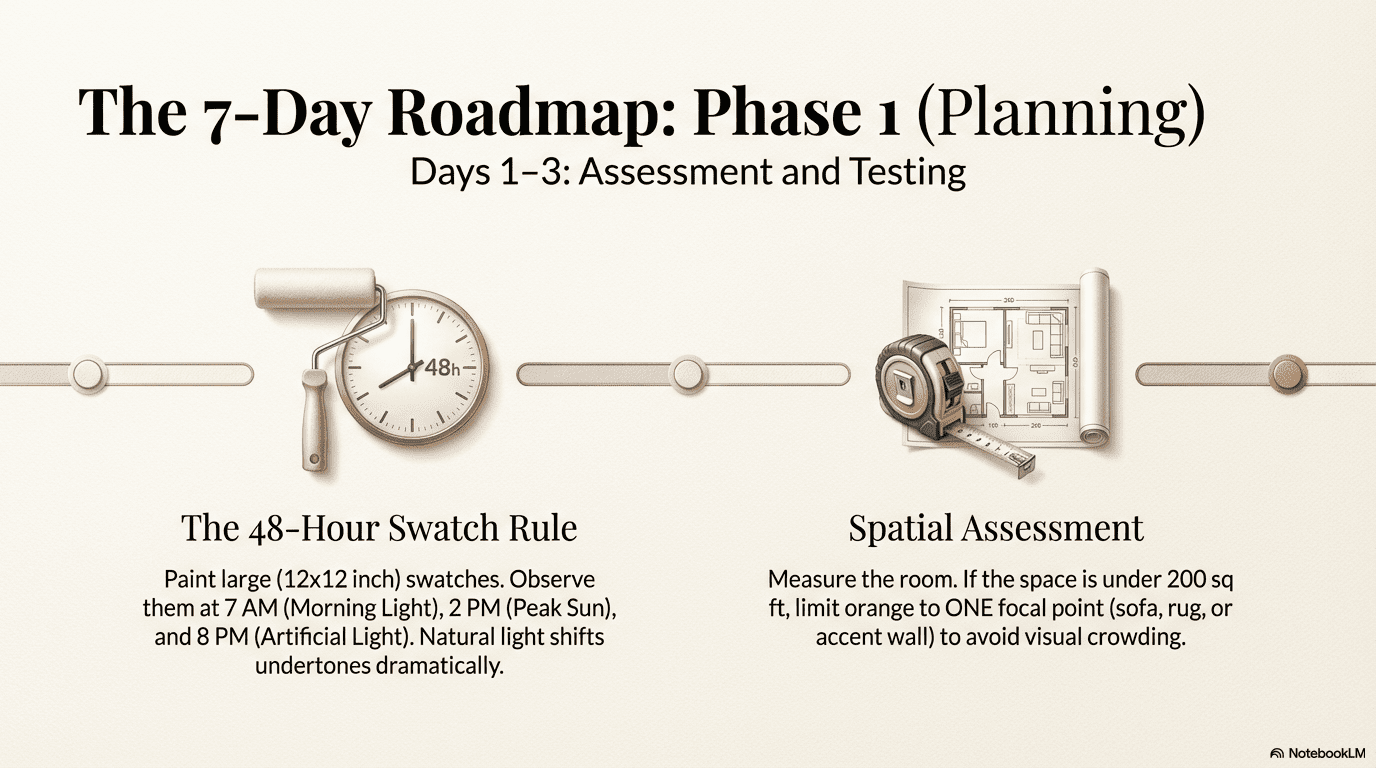
Start by understanding your room’s light and layout. Paint large swatches (12″x12″) of 2–3 orange candidates on different walls.
Observe them at 7 AM, 2 PM, and 8 PM for three days. Note how north-facing rooms cool the tone, while south-facing ones intensify warmth.
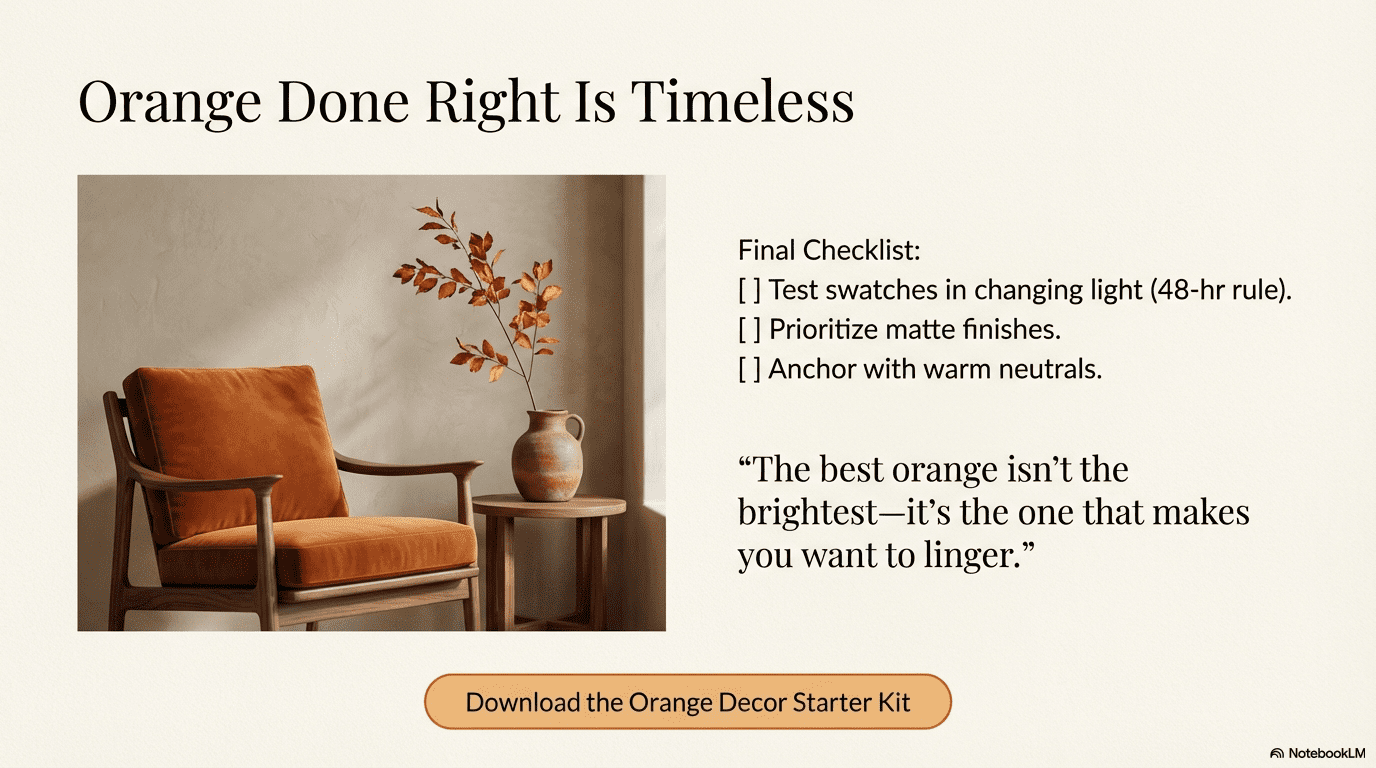
Pro Workflow: Use the “48-Hour Swatch Rule”—if you still love the color after two full days of changing light, it’s a keeper.
Also, measure your space. In rooms under 200 sq ft, limit orange to one focal point (sofa, rug, or wall) to avoid visual crowding.
Week 2: Choose Materials That Last
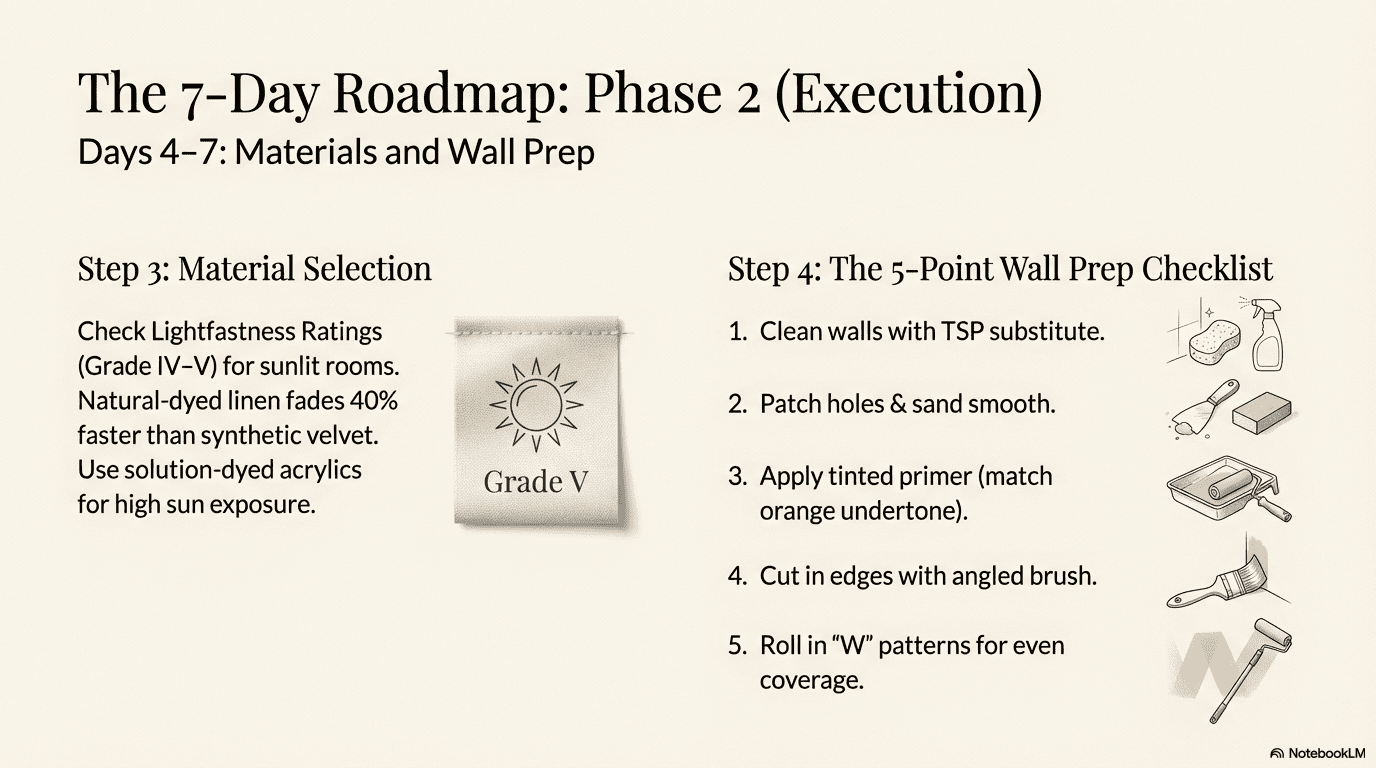
Not all orange materials age equally. Natural-dyed linen fades 40% faster than synthetic velvet under UV exposure (per ASTM D4329).
For sunlit rooms, choose solution-dyed acrylic fabrics or lightfastness-rated textiles (Grade IV–V).
For walls, select eggshell or matte finishes—they hide imperfections and diffuse light softly. Avoid high-gloss; it highlights every bump and scratch.
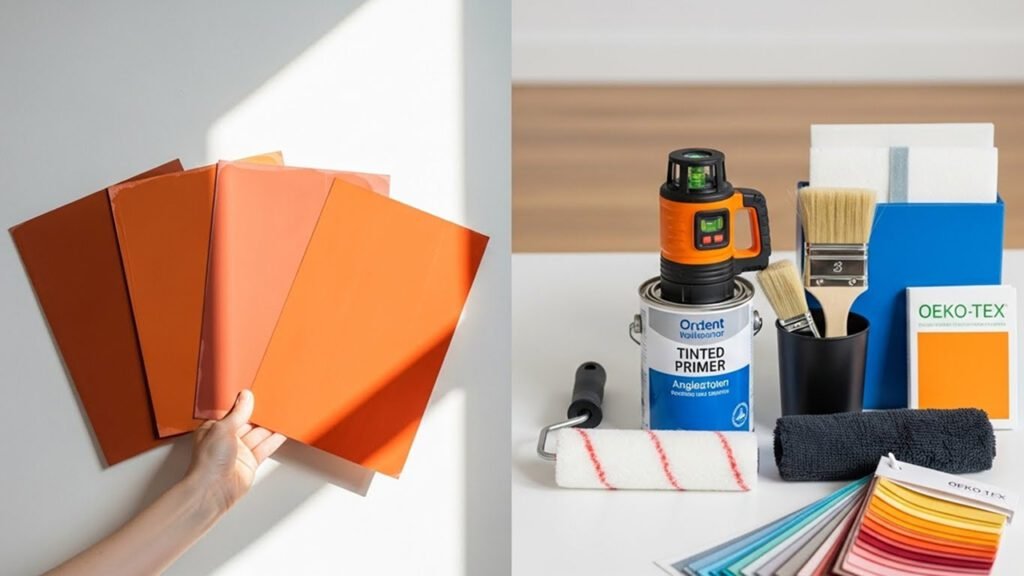
Sustainability Tip: Look for OEKO-TEX® certified fabrics or paints with clay-based pigments, which are biodegradable and low-VOC.
Week 3: Execute with Confidence
Ready to paint? Follow this 5-point wall prep checklist:
- Clean walls with TSP substitute
- Patch holes and sand smooth
- Apply tinted primer (match your orange undertone)
- Cut in edges with angled brush
- Roll in “W” patterns for even coverage
Let dry 24 hours between coats. For accent walls, extend the color onto adjacent trim or ceiling beams for depth—but never more than two surfaces.
Tool Note: Use a laser level to ensure straight lines if pairing with wallpaper or wood paneling.
Expert Styling Tips for Every Home Style
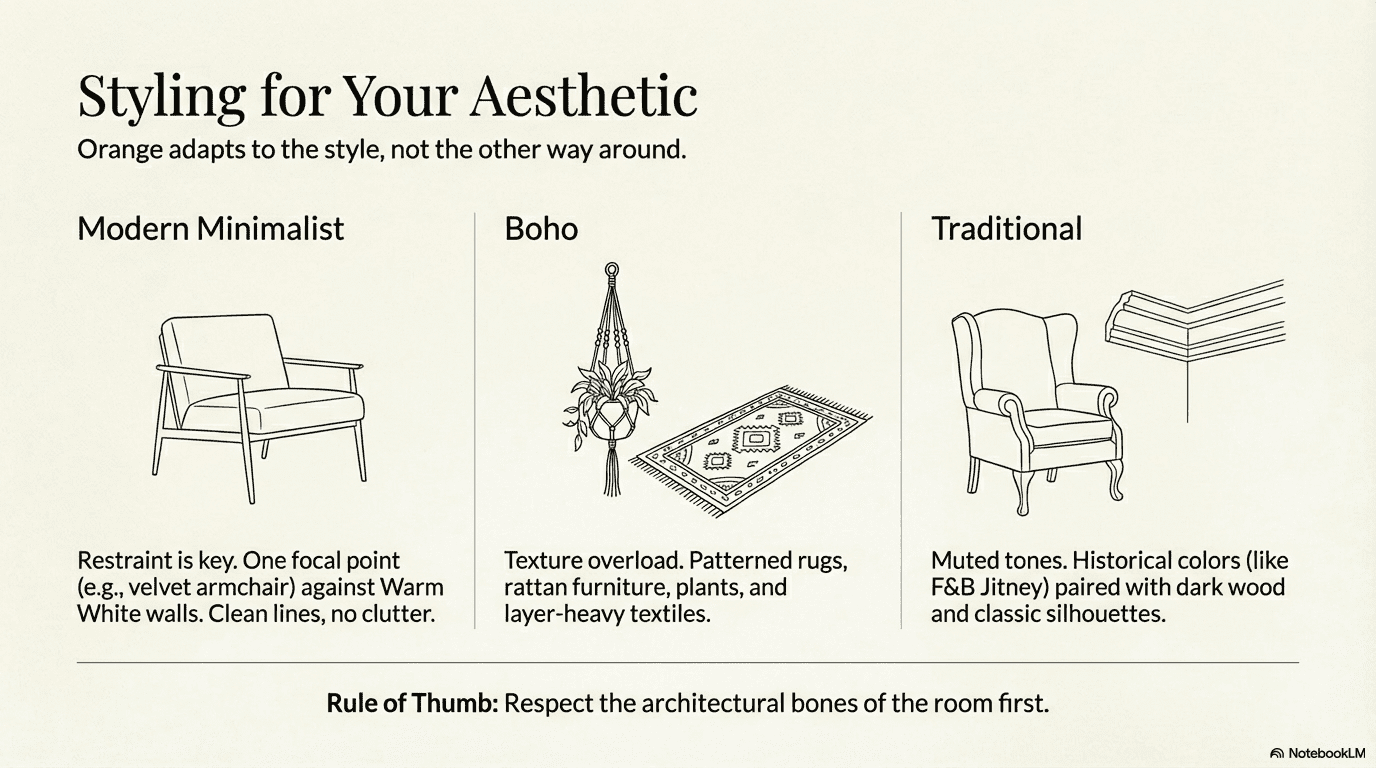
Orange adapts beautifully across design aesthetics—but only if you respect each style’s core principles.
A boho orange living room thrives on texture and pattern, while a modern space demands restraint and clean lines. Below, we break down how to integrate orange authentically into five popular styles, with material pairings and layout cues that competitors overlook.
If pets share your space, explore our full guide to pet-safe modern living room strategies that blend style and resilience—including material pairings that complement earthy orange tones.
How to Make Orange Look Expensive (Not Cheap)
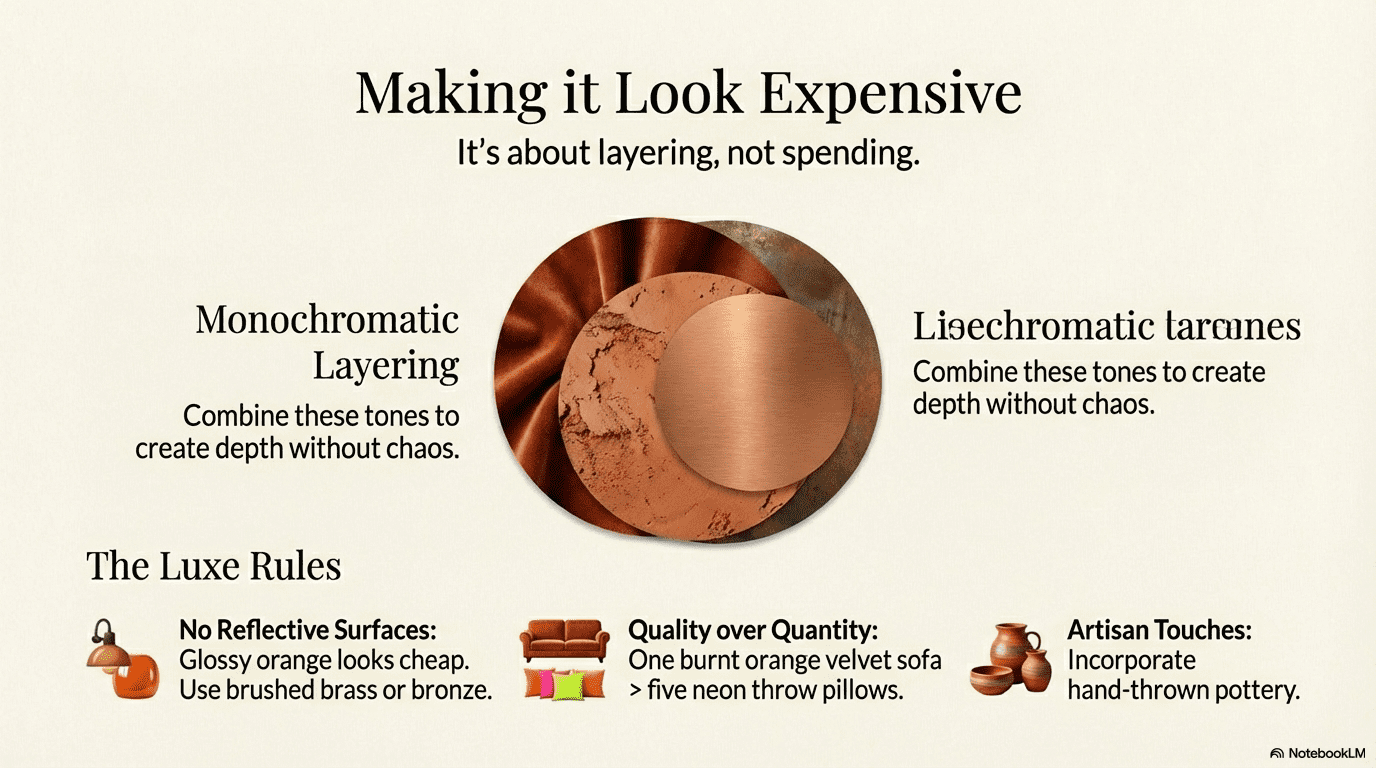
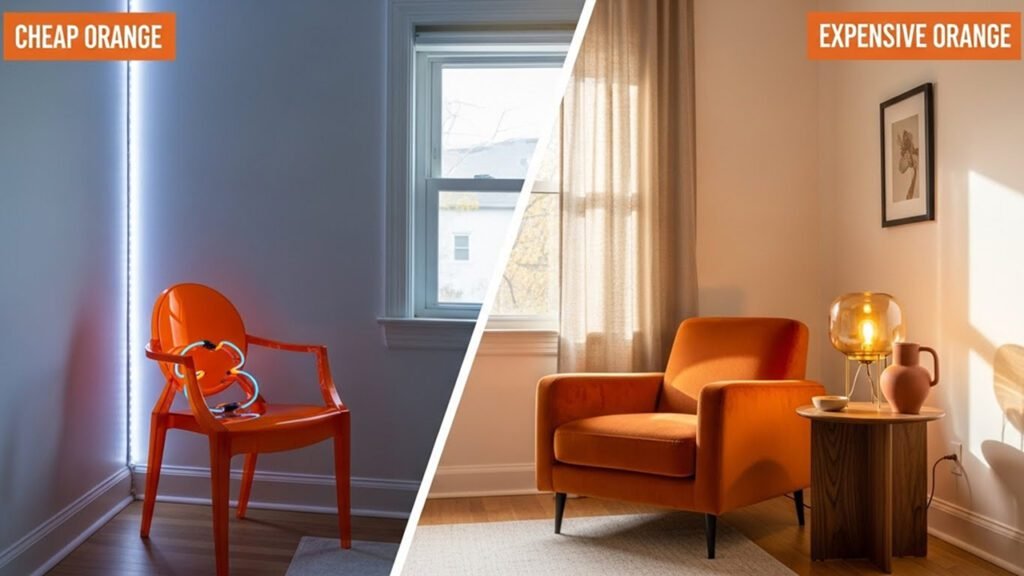
The difference between “luxe” and “loud” lies in material harmony and tonal layering. Avoid shiny plastics, synthetic blends, or overly saturated hues. Instead:
- Choose matte ceramics or hand-thrown pottery in amber or rust
- Layer burnt orange velvet with raw linen and walnut wood
- Use amber glass lamps that cast a warm, diffused glow
Expert Tip: “Monochromatic layering—pairing terracotta, rust, and copper in one space—creates depth without chaos. It’s how high-end designers use orange,” says NYC-based stylist Marco Ruiz.
Also, limit reflective surfaces. Glossy orange furniture can look dated; opt for brushed metal finishes (brass, bronze) instead of chrome.
Orange Decor for Renters & Pet Owners
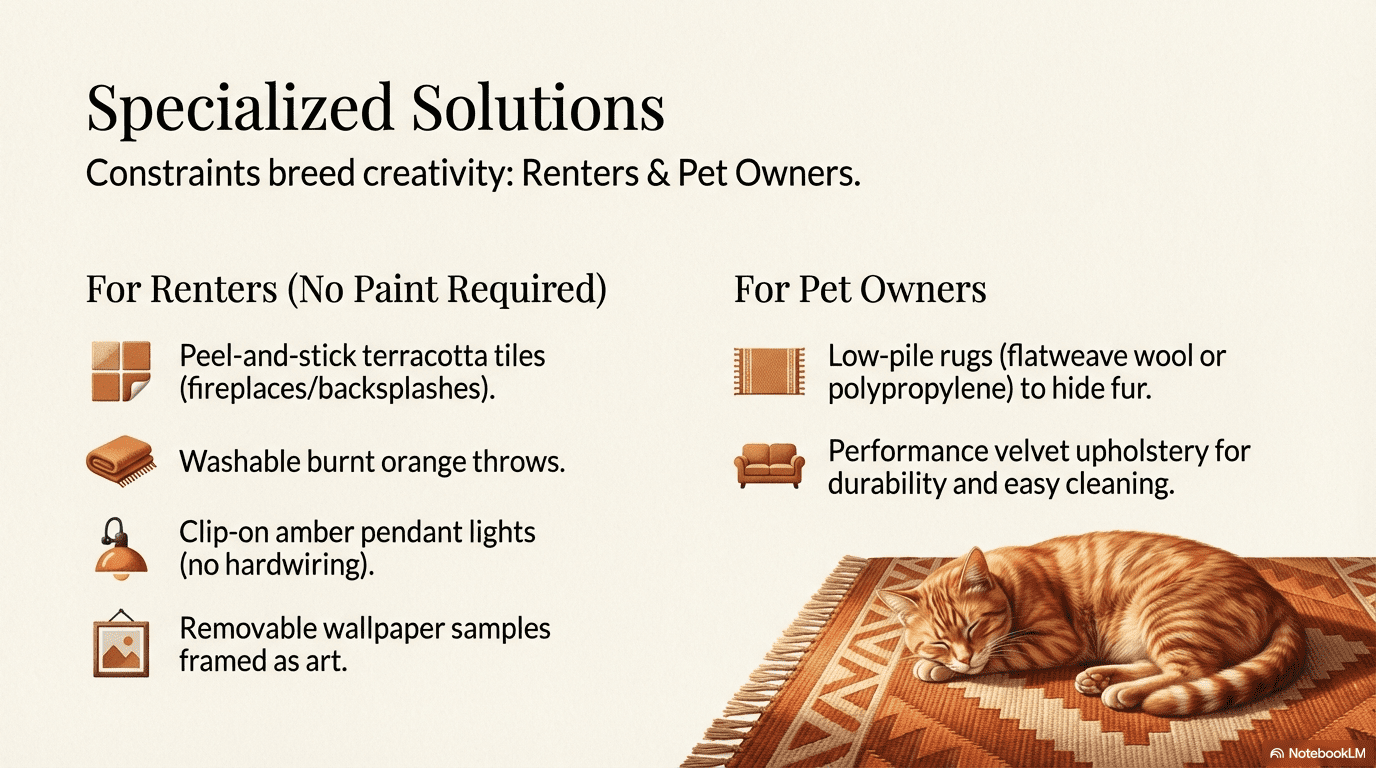
You don’t need to paint walls to embrace orange. Try these renter-friendly swaps:
- Peel-and-stick terracotta tiles for fireplace surrounds
- Washable burnt orange throws (look for performance fabric with stain resistance)
- Clip-on amber pendant lights that require no hardwiring
For pet owners, prioritize durable, low-pile rugs like flatweave wool or indoor/outdoor polypropylene in earthy orange tones. They resist shedding, hide fur, and clean easily.
Pro Hack: Use removable wallpaper samples as framed art—rotate seasonal palettes without commitment.
For pet owners, prioritize durable textiles—like washable, low-pile orange rugs that repel fur and stains—to keep your space both vibrant and practical.
Accessibility, Sustainability & Inclusivity
Great design works for everyone—not just those with perfect vision or unlimited budgets. Yet most “orange living room decor ideas” ignore accessibility standards, eco-impact, and inclusive aesthetics.
This section fixes that gap with actionable guidance rooted in real-world standards like WCAG 2.1 and OEKO-TEX®, ensuring your space is beautiful and responsible.
Is Your Orange Decor Accessible?
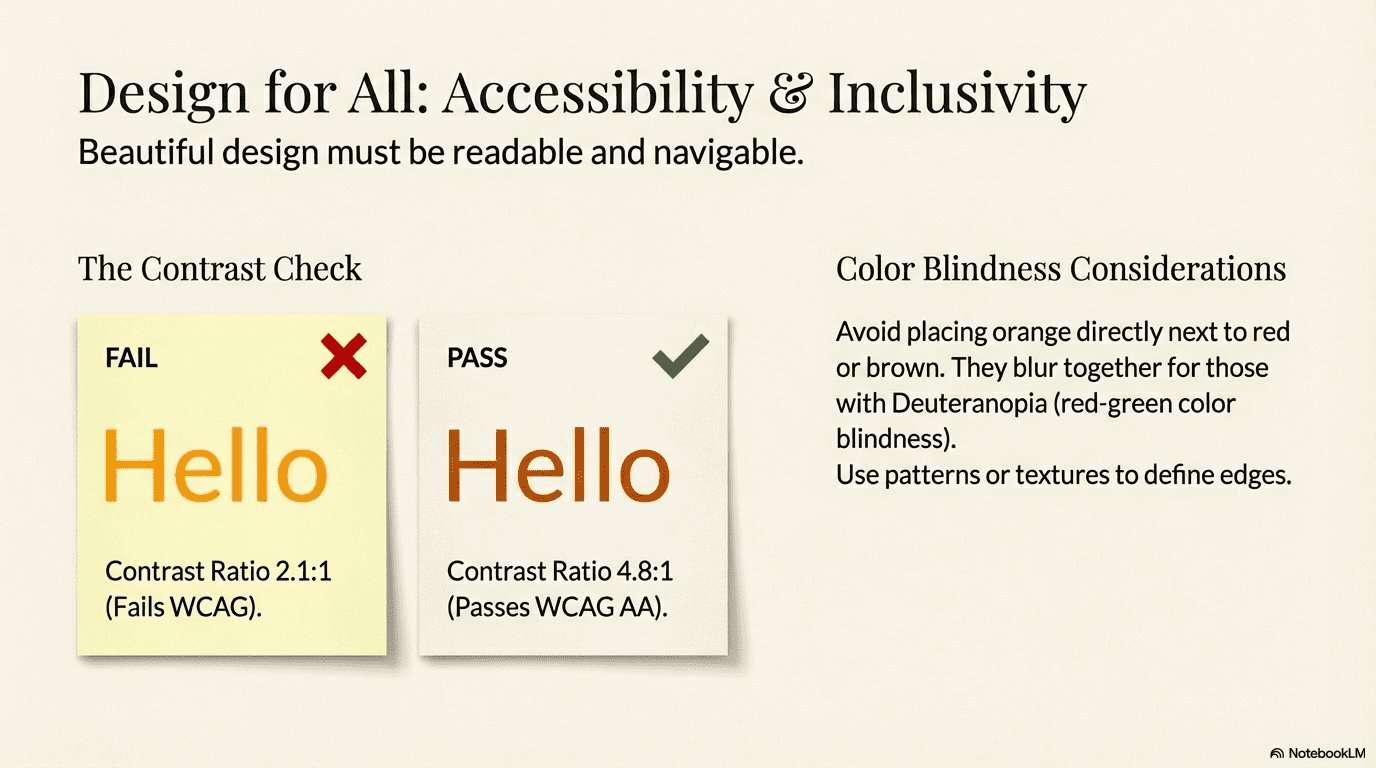
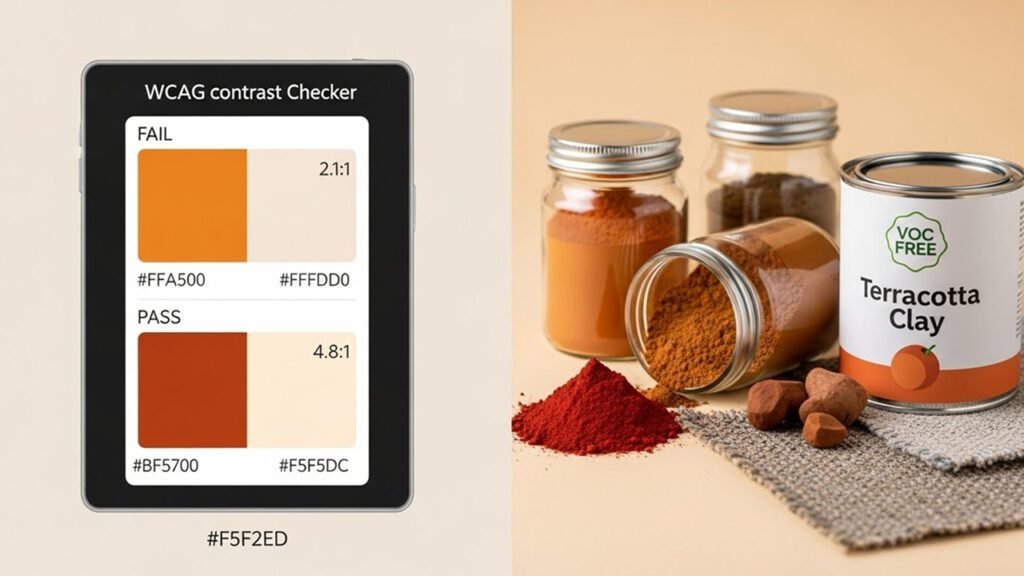
Color contrast matters—especially for the 300+ million people globally with color vision deficiency. Bright orange (#FFA500) on cream (#FFFDD0) has a contrast ratio of just 2.1:1, failing WCAG AA standards for readability and spatial clarity.
But burnt orange (#CC5500) on warm white (#F8F4E9) achieves 4.8:1, which passes.
Quick Fix: If using orange in rugs, art, or upholstery near seating areas, ensure adjacent surfaces provide enough contrast to define edges and pathways.
Use tools like WebAIM’s Contrast Checker to test combinations before buying. For wall decor, avoid placing orange elements against reds or browns—they blur together for deuteranopia (red-green color blindness).
Eco-Friendly Ways to Bring in Orange
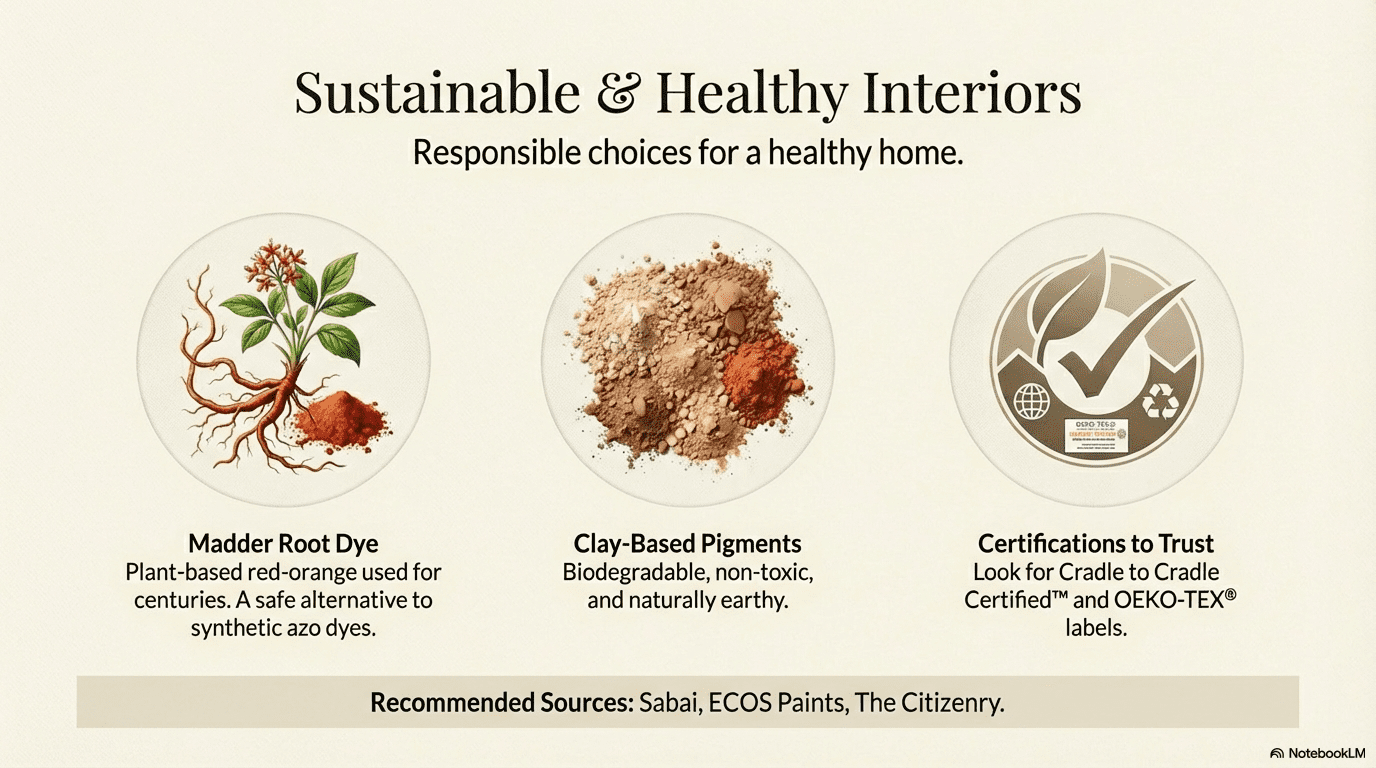
Not all orange is created equal. Synthetic azo dyes—common in fast furniture—can release harmful amines. Instead, choose:
- Madder root dye: a plant-based red-orange used for centuries
- Clay-based mineral pigments: non-toxic and biodegradable
- Recycled performance fabrics: look for Cradle to Cradle Certified™ labels
Sustainability Note: Brands like Sabai, Burrow, and The Citizenry offer orange upholstery made with low-impact dyes and FSC-certified wood frames.
Even paint matters: ECOS Paints and Earth Pigments offer VOC-free orange hues derived from natural oxides—safe for kids, pets, and the planet.
For eco-conscious updates, choose pieces from sustainable, non-toxic brands that offer orange upholstery and accents—many use plant-based dyes and FSC-certified frames.
FAQs: Real Questions About Orange Living Room Decor
These answers address the most common—and most overlooked—concerns about using orange in your living room. Each response is concise, evidence-based, and optimized for voice search and AI overviews.
-
What are the best orange paint colors for a living room in 2026?
The top choices balance warmth and sophistication: Sherwin-Williams Copper Harbor (SW 6357), Benjamin Moore Tangerine Dream (OC-10) for golden undertones, and Farrow & Ball Jitney (No. 98) for an earthy, muted feel.
Always check the LRV (Light Reflectance Value)—aim for 25–40 in average-light rooms to avoid flat or overwhelming results.
-
How do you decorate with orange without it looking like Halloween?
Stick to earthy, desaturated tones like terracotta or rust—not bright pumpkin. Pair orange with neutral backdrops (cream, warm white, greige) and natural textures (rattan, linen, wood).
Avoid black accents; instead, use olive green or navy for contrast. Layering depth through materials prevents a “costume” effect.
-
Can you use orange in a small or dark living room?
Yes—with strategy. Use orange as an accent wall or in textiles only, not on all surfaces. Boost perceived brightness with warm-white lighting (2700K–3000K) and CRI ≥90. Matte finishes absorb light softly, while glossy ones amplify flaws.
A burnt orange rug can anchor the space without closing it in.
-
What colors and materials pair well with burnt orange decor?
Burnt orange harmonizes with olive green, navy blue, warm white, and walnut wood. For materials, choose velvet (for depth), linen (for breathability), matte ceramics, and amber glass.
Avoid cool grays with blue undertones—they clash with orange’s warmth. Instead, opt for greige or taupe if you need a neutral buffer.
-
How do I make orange living room decor look expensive and not cheap?
Focus on material quality over quantity: one burnt orange velvet sofa beats five neon throw pillows. Use monochromatic layering (rust + terracotta + copper), add handcrafted elements (clay vases, woven baskets), and ensure lighting enhances—not flattens—color.
Skip plastic finishes; choose brushed brass or matte black metal instead.
Conclusion: Orange Done Right Is Timeless
Orange living room decor ideas don’t have to be loud, seasonal, or fleeting. When grounded in light science, global craft, material integrity, and inclusive design, orange becomes a timeless anchor for connection, comfort, and character.
Before diving into color, it helps to master the fundamentals of balanced, intentional living room design—proportion, lighting, and flow matter just as much as hue.
Whether you’re painting one wall in Copper Harbor, draping a madder-dyed throw over your sofa, or simply adding an amber glass lamp, you’re not following a trend—you’re building a space that feels deeply human.
Start small. Test thoughtfully. Choose well. And remember: the best orange isn’t the brightest—it’s the one that makes you want to linger, talk, and breathe a little easier.
Free Resource: Download our “Orange Decor Starter Kit”—includes a printable swatch log, WCAG contrast guide, and 7-day action plan.
Some Important Topics Related To Our Content
These are the topics that are related to our content and these are very important topics that people are raising on different platforms and this article will adress each query.
Orange living room decor ideas for a modern minimalist style
For modern minimalist orange living room decor, focus on restraint: one statement piece like a burnt orange velvet armchair against warm white walls. Pair with clean-lined walnut furniture and matte black fixtures.
Avoid clutter—use a single terracotta ceramic vase or amber glass lamp as accent. Choose muted orange tones (e.g., Sherwin-Williams Copper Harbor) over bright tangerine. Layer textures, not patterns: raw linen throw, flatweave rug.
This approach keeps spaces calm yet inviting—proving orange can be sophisticated in minimalist interiors without overwhelming the serene aesthetic.
Best places to buy orange accent furniture for living rooms online
Shop top-rated retailers for orange accent furniture: Article (Sven burnt orange velvet sofa), Burrow (modular rust ottomans), CB2 (amber side tables), and Wayfair (affordable terracotta armchairs).
For sustainable picks, try Sabai (eco-friendly orange sectionals) or The Citizenry (handwoven orange poufs). Always check fabric lightfastness ratings and return policies. Filter by “performance fabric” if you have pets or kids.
These brands offer free swatches—test colors in your lighting before buying. Reliable shipping, quality materials, and modern designs make them ideal for orange living room accent furniture online.
How to combine orange and neutral colors in living room decor
Combine orange and neutral colors by using warm whites, greige, or taupe as your base—never cool gray. Anchor with wood tones (oak, walnut) to bridge warmth.
Use the 60-30-10 rule: 60% neutral walls/floor, 30% wood/textures, 10% orange accents (pillows, art, lamp).
Choose earthy orange shades like terracotta or rust—not neon. A cream sofa with burnt orange throw pillows and a jute rug creates balance. This combo ensures your orange living room feels cohesive, calming, and intentionally styled—not chaotic or seasonal.
Orange pops beautifully against grounded neutrals—consider pairing it with neutral-based schemes like black and beige that let orange shine as an accent.
Affordable orange living room rugs and throw pillows recommendations
For affordable orange living room rugs, try Ruggable’s washable terracotta flatweave ($129) or Lorena Canals’ rust cotton rug ($199). On Amazon, nuLOOM’s Moroccan-style burnt orange rug (5×8 ft, $89) offers durability.
For throw pillows, H&M Home ($15–$25) has linen rust covers; Target’s Opalhouse line features olive-orange botanical prints. Look for “performance fabric” or “machine-washable” labels.
These budget-friendly orange throw pillows and rugs add warmth without sacrificing practicality—perfect for renters or pet owners seeking stylish, low-cost updates.
Orange-themed living room lighting fixtures and lamps options
Choose orange-themed living room lighting that enhances warmth: amber glass floor lamps (like CB2’s Aura), terracotta ceramic table lamps (from Etsy artisans), or rattan pendant lights with warm bulbs (2700K).
Avoid plastic shades—opt for hand-blown glass or matte ceramic. Brands like Visual Comfort and Schoolhouse offer high-CRI (≥90) fixtures that preserve true orange tones. Dimmable LEDs prevent glare.
These orange living room lighting fixtures cast a cozy, golden glow—ideal for highlighting burnt orange sofas or terracotta walls without washing out color.
Top-rated orange wall art prints for living rooms available for purchase
Find top-rated orange wall art prints on Etsy (custom abstract terracotta canvases), Minted (modern burnt orange botanical prints), and Society6 (global-inspired Moroccan pattern posters).
Look for “archival ink” and “matte finish” to reduce glare. Sizes: 24″x36″ for focal walls, 12″x12″ for gallery clusters. Pair with wood frames to tie into furniture.
These orange wall art prints for living rooms add curated color without overwhelming—ideal for renters or minimalists wanting subtle, artistic warmth above a neutral sofa.
Orange living room paint colors that complement wood furniture
Best orange living room paint colors with wood furniture: Sherwin-Williams Copper Harbor (SW 6357) for walnut, Benjamin Moore Adobe Dust (OC-73) for oak, or Farrow & Ball Jitney (No. 98) for teak.
These earthy oranges harmonize with wood grain without clashing. Avoid cool undertones—stick to red- or yellow-based oranges. Test swatches beside your furniture in natural light.
An orange living room paint color with LRV 25–35 ensures depth without darkening the space—perfect for creating a warm, grounded atmosphere alongside wood tones.
Where to find orange velvet sofas for living room decor
Find orange velvet sofas at Article (Sven in “Rust”), Joybird (custom burnt orange velvet sectionals), Anthropologie (Amherst sofa in terracotta), and West Elm (limited-edition amber options).
For budget picks, Overstock and Wayfair offer under $800. Prioritize “performance velvet” for stain resistance. Check cushion fill (high-resilience foam > polyester). These retailers provide fabric swatches—essential for matching your lighting.
Orange velvet sofas for living room decor blend luxury and comfort, especially when paired with wood coffee tables and neutral rugs.
Creative DIY orange living room decor projects with supplies list
Try these DIY orange living room decor projects:
- Terracotta planters: Paint clay pots with clay-based orange paint (supplies: terra cotta pots, ECOS paint, brush).
- Shibori-dyed pillow covers: Use madder root dye on cotton (fabric, dye kit, rubber bands).
- Amber glass lamp: Spray-paint clear glass vase with translucent amber finish (glass vase, Krylon Stained Glass Paint).
All cost under $30. These creative DIY orange living room decor projects add artisanal warmth while aligning with sustainable, non-toxic design principles.
Orange living room decor ideas for small spaces with product suggestions
In small spaces, use orange living room decor ideas strategically: a burnt orange floor lamp (IKEA STRÅLA, $25), removable terracotta wallpaper (Chasing Paper, $65/roll), and a 24″x24″ rust throw pillow (H&M Home).
Opt for a nesting orange side table (CB2, $129) instead of large furniture. Mirrors with amber frames amplify light.
These orange living room decor ideas for small spaces add warmth without crowding—keeping the room airy yet inviting through smart, scaled accents.